
 EN
EN

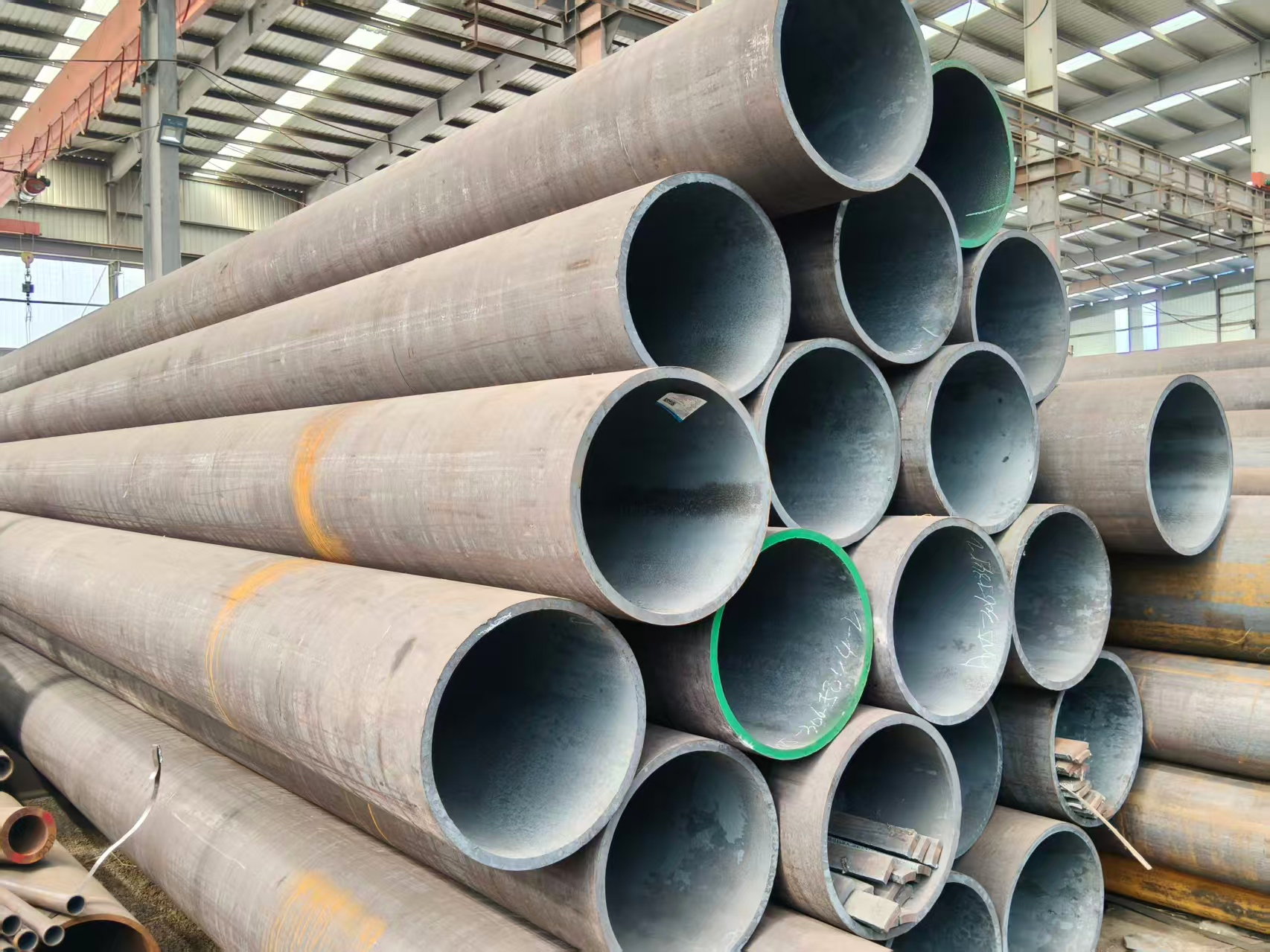
Raw Material Composition and Its Influence on Carbon Seamless Pipe Integrity
What makes carbon seamless pipes strong or resistant to rust really comes down to their steel makeup. When talking about carbon levels, we're looking at around 0.24 to 0.35 percent as ideal because this range gives good strength without making welding too difficult. Manganese content usually sits between 1.3 and 1.65 percent, which helps the metal harden better during processing. But there's trouble when impurities creep in. Sulfur above 0.025 percent creates those nasty sulfide spots inside the metal that spread cracks faster when pressure builds up. This becomes especially bad news in areas where acid is present, often leading to pipes breaking before their time. Many maintenance teams have seen this issue firsthand in pipelines across different industries.
Good quality control starts at the source, which is why serious raw material suppliers rely on spectrographic analysis to keep things consistent between batches, something the 2023 Steel Quality Benchmark Report actually points out. Take one mill in North America for example they cut down on ovality defects by about 32% once they switched over to those ISO 9001 certified billets that come with strict phosphorus limits maxed out at 0.015%. No wonder forward thinking manufacturers are pushing for blockchain tracked material histories these days. The industry data shows this kind of tracking eliminates all sorts of variability problems that were causing roughly 17% of ASTM A106 certifications to get rejected back in 2022 according to what we've seen across the sector.
Key Manufacturing Processes That Determine Carbon Seamless Pipe Quality
Overview of Seamless Pipe Production Techniques
The quality of seamless pipes really depends on how accurately they're manufactured. Steel billets get heated up around 1200 degrees Celsius before being pierced with something called a mandrel to create those hollow shapes we all know. VicSteel did some research back in 2023 that explains this whole thing pretty well. After forming the basic shape, there are several other steps involved like stretching out the metal, applying different kinds of heat treatments, and then pulling it through dies when it's cold. These additional processes help improve important characteristics such as tensile strength somewhere between 450 and 550 megapascals plus better protection against rusting. Getting rid of those seams makes sure pressure gets distributed evenly throughout the pipe, something that matters a lot when dealing with systems under high pressure conditions.
Pilgering vs. Plug Rolling: Impact on Structural Uniformity
The strength and stability of a product really comes down to what forming method gets used during production. Pilgering works through gradual cold working processes that bring wall thickness differences down to around 0.1 mm, which makes things much more centered and uniform - especially important for applications where precision matters, such as hydraulic systems. Plug rolling is another option, and it does go quicker, but there's often issues with certain areas ending up about 5% thicker along those seam lines. Because of these differences, most factories will choose pilgering over other methods when they need to manufacture ASTM A106 grade pipes that must meet strict specifications with ovality tolerances no worse than 1%. The industry has seen enough problems from poor concentricity that this choice isn't just about speed anymore.
Minimizing Wall Thickness Variation Through Process Optimization
Advanced process controls reduce thickness deviations by 40% compared to traditional methods. Real-time monitoring adjusts mandrel speeds and roll pressures during hot rolling, keeping deviations within ±5% of target specifications. One tube mill achieved a reduction in scrap rates from 8% to 3% through optimized parameters, according to a 2023 case study.
Cooling and Lubrication: Their Role in Dimensional Stability
Controlled cooling rates between 15–25°C/minute prevent warping and residual stresses. Water-based lubricants with €0.5% sulfur content minimize surface oxidation while ensuring smooth finishes (Ra €12.5 μm). Poor lubrication can increase surface defects by 30%, jeopardizing API 5L compliance.
Data Insight: Reducing Scrap Rates With Optimized Parameters
Machine learning-driven adjustments cut material waste by 18% in 2023 trials. Algorithms analyzing over a dozen variables—including billet temperature gradients and roll alignment—achieved 99.2% dimensional compliance in high-pressure gas pipelines, saving $740k/year per production line.
Heat Treatment Protocols and Mechanical Property Development in Carbon Seamless Pipes
Normalizing, annealing, and quenching: Selecting the right method for desired properties
The way we treat heat plays a big role in how strong and durable those carbon seamless pipes actually are. When we normalize the metal, it helps create a more even grain structure throughout. Annealing works differently - it basically makes the material more flexible by getting rid of those pesky internal stresses left from manufacturing. Quenching gives us super hard surfaces but comes with risks if we don't cool things down just right, otherwise we end up with cracks nobody wants to see. Most factories follow guidelines set out in standards such as ASTM A106, which tell them exactly what temperatures to hit depending on how thick the pipe walls are and what percentage of carbon they contain. Getting these heat treatments right can save companies money later on since there's less need for extra machining after treatment. Some recent studies suggest savings between 18% to 22% when everything goes smoothly during processing.
Precision temperature control and microstructure refinement
Deviations exceeding ±15°C during heat treatment disrupt phase transitions, weakening tensile strength and corrosion resistance. Modern induction heating systems achieve 99.5% temperature uniformity across pipe lengths up to 12 meters. A 2023 study found this level of control reduced micro-void density by 34% compared to conventional furnaces.
Case study: Enhancing tensile strength through controlled cooling
A 2022 trial on API 5L X65 pipes demonstrated that staged cooling at 25–30°C/minute between 800–500°C increased yield strength from 572 MPa to 653 MPa—a 14% improvement. Validated using advanced thermal processing techniques, this method eliminated the need for expensive alloy additions while preserving 28% elongation.
Grade-specific vs. universal heat treatment: Evaluating effectiveness
Universal heat treatment wastes 12–17% more energy by over-processing thinner-walled pipes (€6 mm). Customized, grade-specific regimes tailored to chemical composition reduce cycle times by 20–40 minutes per batch. ASME Section II data shows these optimized schedules improve Charpy impact values by 31% for high-sour service applications.
Tooling, Equipment Maintenance, and Production Consistency in Carbon Seamless Pipe Manufacturing
Mandrel and Roll Wear: Effects on Pipe Geometry and Ovality
Worn mandrels and forming rolls compromise dimensional accuracy. A 0.1 mm increase in tool clearance due to abrasion can lead to 2% ovality deviations—exceeding API 5L limits. Real-time wear monitoring alerts operators when surface hardness drops below 45 HRC, a critical threshold for maintaining circularity.
Surface Quality Degradation Due to Tool Misalignment or Fatigue
Misaligned tooling causes longitudinal seams and spiral marks, increasing corrosion susceptibility by 30% (NACE 2022). Microcracks in fatigued guide rolls transfer to pipe surfaces, necessitating costly grinding repairs. Vibration analysis tools now detect alignment shifts as small as 0.05 mm before defects manifest.
Preventive Maintenance Strategies for Stable High-Volume Output
Four key practices maintain production consistency:
- Tool life tracking: Replace mandrels after 1,200–1,500 extrusion cycles
- Lubricant filtration: Maintain contaminant particles below 10 μm to prevent scoring
- Thermal imaging: Identify bearing hotspots during high-speed rolling
- AI-driven predictive maintenance: Reduce unplanned downtime by 72%
Manufacturers applying these protocols achieve 99.3% first-pass yield rates in high-pressure pipeline applications, according to recent research.
Dimensional Accuracy, Surface Finish, and Final Quality Assurance of Carbon Seamless Pipes
Critical Tolerances: Outer Diameter, Wall Thickness, and Straightness Control
Getting the dimensions right is absolutely critical when it comes to making sure parts fit properly and hold up under pressure in high-stress systems. The industry standard requires pretty strict controls on measurements like outer diameter with a tolerance of plus or minus 0.5%, wall thickness varying no more than 7.5%, and straightness staying within 0.2 mm per meter run. Most serious manufacturers have adopted laser guided measurement systems along with real time ovality corrections to hit these targets consistently. Recent testing from last year showed something interesting too - seamless pipes actually performed better than their welded counterparts by around 18% when tested for concentricity according to ASTM A106 standards. This kind of data helps explain why so many engineers prefer seamless options for critical applications where precision really matters.
Common Surface Defects: Causes and Corrective Measures
Scale formation during heat treatment (affecting 3–8% of batches) and handling scratches account for 72% of surface rejections. Effective corrective measures include:
- High-pressure water descaling: Removes 95% of mill scale without damaging the substrate
- Rotary belt grinding: Addresses minor imperfections post-extrusion
- Eddy-current inspection: Detects sub-100 μm cracks before final finishing
Balancing High-Speed Production with Precision Finishing Requirements
Modern tube mills employ adaptive machining algorithms that adjust feed rates using real-time ultrasonic thickness data. This allows surface roughness (Ra) to remain below 12.5 μm even at production speeds of 25 m/min—representing a 40% improvement over conventional approaches.
Non-Destructive Testing: Ultrasonic vs. Eddy Current Inspection Methods
| Parameter | Ultrasonic Testing | Eddy Current Testing |
|---|---|---|
| Defect Sensitivity | ¥1.5% wall thickness loss | Surface cracks ¥0.5 mm |
| Speed | 10–15 m/min | 25–30 m/min |
| Material Limitations | Thick-walled pipes (>40 mm) | Non-conductive coatings |
Compliance with API 5L and ASTM A106 Standards and Certification Challenges
The 2022 revision of API 5L introduced 23 new testing parameters for sour service conditions, requiring upgrades to hardness testing infrastructure. Over 35% of mills initially failed audits due to insufficient hydrogen-induced cracking (HIC) test frequency. Automated sample selection systems are now addressing this gap.
Emerging Trend: AI-Driven Systems for Real-Time Quality Prediction
Neural networks trained on more than 50,000 pipe inspection records can predict dimensional drift with 94% accuracy up to 20 minutes before it occurs. Early adopters report a 31% reduction in scrap rates and sustained compliance with ±0.1% tolerance during speed transitions.
FAQ
What is the ideal carbon content in carbon seamless pipes for optimal strength?
The ideal carbon content ranges between 0.24% to 0.35%, providing good strength without making welding difficult.
Why is pilgering preferred over plug rolling in manufacturing seamless pipes?
Pilgering ensures uniform wall thickness, reducing thickness differences to around 0.1 mm, which is vital for precision-based applications.
How do advanced process controls minimize wall thickness variation?
Real-time monitoring adjusts mandrel speeds and roll pressures during hot rolling, keeping deviations within ±5% of target specifications.
What are the benefits of customized, grade-specific heat treatment?
It reduces cycle times and improves Charpy impact values by tailoring regimes to chemical compositions, leading to energy savings.
How do AI-driven systems enhance production consistency in carbon seamless pipes?
AI-driven systems detect dimensional drift with 94% accuracy, reducing scrap rates by adjusting parameters in real-time.
Table of Contents
- Raw Material Composition and Its Influence on Carbon Seamless Pipe Integrity
- Key Manufacturing Processes That Determine Carbon Seamless Pipe Quality
- Heat Treatment Protocols and Mechanical Property Development in Carbon Seamless Pipes
- Tooling, Equipment Maintenance, and Production Consistency in Carbon Seamless Pipe Manufacturing
-
Dimensional Accuracy, Surface Finish, and Final Quality Assurance of Carbon Seamless Pipes
- Critical Tolerances: Outer Diameter, Wall Thickness, and Straightness Control
- Common Surface Defects: Causes and Corrective Measures
- Balancing High-Speed Production with Precision Finishing Requirements
- Non-Destructive Testing: Ultrasonic vs. Eddy Current Inspection Methods
- Compliance with API 5L and ASTM A106 Standards and Certification Challenges
- Emerging Trend: AI-Driven Systems for Real-Time Quality Prediction
-
FAQ
- What is the ideal carbon content in carbon seamless pipes for optimal strength?
- Why is pilgering preferred over plug rolling in manufacturing seamless pipes?
- How do advanced process controls minimize wall thickness variation?
- What are the benefits of customized, grade-specific heat treatment?
- How do AI-driven systems enhance production consistency in carbon seamless pipes?