
 EN
EN

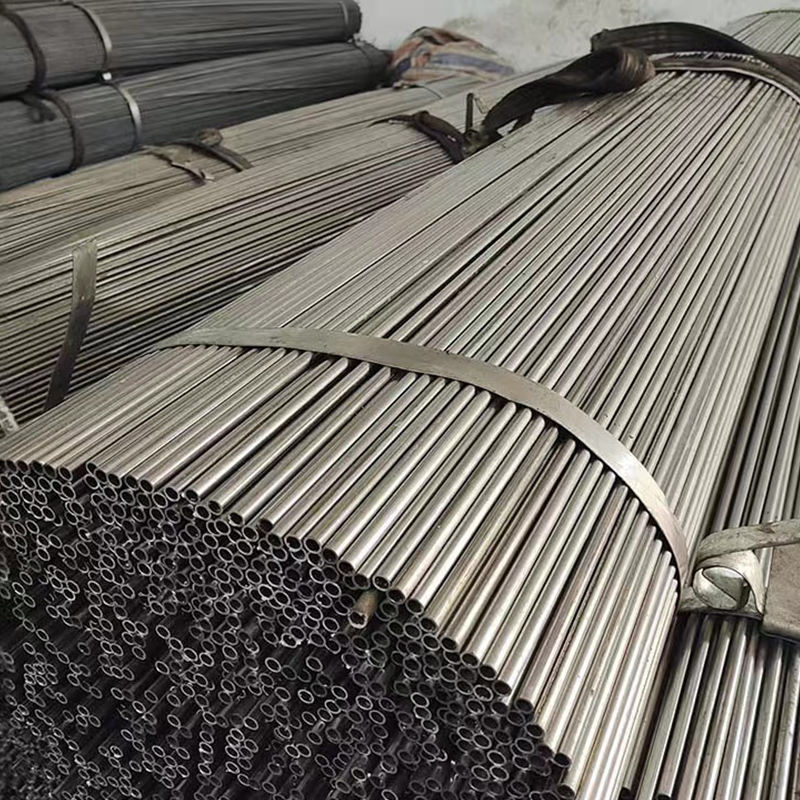
Understanding Dimensional Accuracy and Tight Tolerances
Diameter and Wall Thickness Tolerances as Critical Performance Indicators
In precision tube manufacturing, diameter and wall thickness tolerances directly determine component performance. Maintaining variations under ±0.010’’ (0.25 mm) reduces hydraulic system leaks by 87% (2025 data). Modern CNC machining with laser micrometers achieves 5-micron measurement accuracy, while automated sorting systems reject deviations exceeding 0.12% of nominal wall thickness.
Length, Straightness, and Roundness Control in High-Precision Applications
Geometric tolerances governed by GD&T standards ensure tubes meet straightness requirements under 0.001’’/ft and roundness within 0.1% of OD. Aerospace applications demand length accuracies of ±0.002’’ to prevent misalignment in fuel injection systems, where 25% of component failures trace to dimensional drift (2024 analysis).
The Role of Tight Tolerances in System Efficiency and Reliability
Tight manufacturing tolerances improve energy efficiency by 9–12% in heat exchanger tubes by optimizing fluid flow dynamics. Medical gas delivery systems require bore consistency within 0.003’’ to maintain 99.9% purity levels, demonstrating how micron-level precision prevents cross-contamination.
Precision Measurement and Inspection Tools for Verifying Dimensional Accuracy
Laser scanners now achieve 0.0002’’ resolution for wall thickness mapping, while coordinate measuring machines (CMMs) verify straightness with 0.0005’’ repeatability. Automated optical comparators inspect 500+ tubes/hour against digital blueprints, reducing manual inspection errors by 63% (2024 Manufacturing Quality Report).
How Tolerances and Specifications Ensure Proper Fit and Function
Properly specified tube tolerances prevent assembly issues like press-fit resistance (over 50 kN/cm²) or seal failures in high-pressure systems. By controlling OD variations to ±0.0004’’, manufacturers achieve 98% first-pass yield rates in automotive brake line production.
Selecting the Right Material Grade and Mechanical Properties
Key mechanical properties: strength, ductility, and hardness of precision tubes
The strength of a precision tube basically tells us how well it holds up when pressure is applied, whereas ductility means the material can be bent without actually breaking apart. When we talk about hardness, this refers to how resistant the surface is to wearing down during operations where friction is constant, something typically checked using either Rockwell or Vickers testing methods. Looking at recent data from industry benchmarks around 2024, there was evidence showing that tubes rated above 800 MPa in tensile strength cut down on failures within hydraulic components by roughly 34%. Of course, all these characteristics need to match what's required for specific applications. Going beyond what's needed just ends up costing more money without any real benefit most of the time.
Material selection based on load, stress, and fatigue resistance requirements
When it comes to material selection, engineers tend to look for options that can take repeated stress cycles and dynamic forces without developing cracks over time. Stainless steel variants such as 316L work pretty well in environments where corrosion is a concern and the loads aren't too extreme. For situations involving much higher pressures, like those found in aerospace actuator components, chrome molybdenum alloys generally perform better. Recent research from last year looked at how different treatments affect fatigue resistance. What they found was quite interesting stress relieved precision tubes lasted about 62 percent longer in robotic arm applications than their untreated counterparts did before failing. This kind of data really helps manufacturers make informed decisions when balancing performance requirements against cost considerations.
Comparing common steel and alloy grades for high-performance environments
- 304 Stainless Steel: Optimal for chemical processing (corrosion-resistant, moderate strength).
- 4130 Alloy Steel: Ideal for structural applications requiring weldability and 950 MPa tensile strength.
- Inconel 625: Used in extreme temperatures (up to 980°C) for turbine components.
Impact of material grade on long-term durability and performance
In heavy machinery operations, switching to higher quality alloys can slash maintenance needs by somewhere between forty to sixty percent according to field tests conducted over five years on mining equipment. When companies upgraded their hydraulic systems from standard carbon steel to duplex stainless steel tubing, they saw annual savings of around eighteen thousand dollars per machine just from reduced replacements. The grade of material makes all the difference when it comes to fighting off problems like pitting corrosion, heat damage, and those tiny cracks that start forming after months of operation. Equipment manufacturers who invest in better materials typically find themselves spending less money on repairs down the road while keeping their machines running smoother for longer periods.
Evaluating Pressure, Temperature, and Thermal Expansion Performance
Precision tubes must withstand demanding operational conditions while maintaining dimensional stability. Engineers prioritize three interconnected factors—pressure capacity, thermal resilience, and expansion characteristics—to ensure long-term system integrity.
Matching Pressure Ratings with System Operating Conditions
When choosing tubes, make sure their burst pressure is at least 1.5 times higher than what the system will normally handle. Components that aren't rated high enough contribute to around 23% of all failures in fluid systems according to ASME standards from 2022. For example, if a system runs at 2.3 atmospheres, then tubes should be able to withstand at least 3.45 atm when tested properly. This isn't just math on paper either it comes from real world thermodynamics calculations used throughout the industry. And don't forget those unexpected pressure surges that happen so often in both hydraulic and pneumatic setups. Leaving some extra room in the design specs can save headaches down the road when things get busy or conditions change unexpectedly.
Performance of Precision Tubes Under Extreme Temperature and Pressure
High-grade stainless steels retain 92% of yield strength at 400°C compared to room temperature, while aluminum alloys degrade 40% faster under combined heat and pressure (2023 ASME Materials Report). For cryogenic environments, nickel-based alloys demonstrate superior fracture resistance below -150°C.
Accounting for Thermal Expansion in Precision Tube Design and Installation
Stainless steel expands 0.017% per 100°C temperature rise (ASTM E228), requiring engineers to incorporate expansion loops or flexible couplings in layouts. A 2024 NIST study found improper thermal compensation causes 31% of tube joint failures in HVAC and process systems.
Ensuring Stability in Dynamic Thermal Environments
To deal with cyclical stress issues, engineers often turn to FEA simulations that predict how materials deform under pressure. Slip joints are another solution, designed to handle about 5% length changes in pipelines during installation. For high temp systems, ceramic coatings cut down heat transfer by around 60%, which makes a big difference in performance. Testing these solutions in real world conditions is absolutely essential though. Most industries run at least 500 cycles of thermal shock tests before deployment, especially in aerospace and energy sectors where temperatures can swing over 300 degrees Celsius per hour. These rigorous tests help ensure components won't fail when subjected to extreme operating conditions.
Enhancing Corrosion Resistance and Surface Finish
Corrosion-Resistant Materials for Harsh Chemical or Environmental Exposure
When it comes to precision tubes used in chemical processing plants, marine vessels, or offshore platforms, choosing materials that naturally resist corrosion really matters. Take stainless steel grades such as 316L and those duplex alloys they tend to show about 40-45% better protection against pitting corrosion than regular carbon steels, especially when dealing with high chloride levels. Many manufacturers now combine these basic metals with nickel-based cladding layers for their hydrocarbon processing equipment. This makes sense because hydrogen sulfide (H2S) and carbon dioxide (CO2) exposure can wear down materials pretty quickly in these harsh environments.
Surface Treatments That Improve Longevity and Performance
Surface engineering techniques can extend the life of industrial tubes anywhere from 30 to 60 percent depending on the application. One common method is electropolishing, which smooths out surfaces down to around 0.8 microns or less in roughness. This helps eliminate tiny cracks and grooves where corrosion tends to start building up over time. When working with hydraulic or pneumatic equipment, engineers often apply thermal sprayed ceramic coatings. These create a super hard surface (over 500 HV) while keeping pores at less than five percent. Such treatments work hand in hand with passivation processes too. Passivation creates those protective chromium oxide layers on stainless steel tubes used in pharmaceutical settings. Maintaining these sterile conditions is absolutely essential for drug manufacturing operations where contamination risks must be kept to absolute minimum levels.
Industry-Specific Surface Finish and Contamination Control Requirements
The need for different surface finishes really depends on what industry we're talking about. For instance, semiconductor gas delivery systems require those super smooth mirror finishes under 0.4 microns Ra because even tiny particles can cause problems. On the flip side, food grade tubing needs to meet FDA standards through processes like electropolishing. The latest updates to ASTM B342 standard have changed things quite a bit too. Now companies working on nuclear cooling systems must get their surface treatments checked out by independent third parties, showing how much stricter quality controls have become lately. To keep up with these demands, manufacturers are turning to inline laser profilometers which help them stay within tight tolerances of plus or minus 0.1 microns when producing batches of precision tubes. This attention to detail makes all the difference in industries where reliability is absolutely critical.
Ensuring Compliance with Global Standards and System Integration
Overview of key standards: ASTM, DIN, EN, ISO, and SAE for precision tubes
When it comes to precision tubes in fields such as aerospace engineering, medical device manufacturing, and robotic systems, there are several international standards that need following. Think ASTM E8 when talking about mechanical tests, DIN 17458 covers stainless steel tubing requirements, while ISO 3304 deals specifically with dimensional tolerances. The reason these standards matter so much is because they create consistency across roughly 87 percent of all industrial uses. They set clear limits on how much variation is allowed in things like outer diameter measurements and wall thickness specifications. For parts where even small differences matter a lot, this becomes really important. Take hydraulic cylinders for example. If there's just a 0.05 mm difference either way in dimensions, sealing performance drops down by around 25%, according to findings from the ASME Materials Standards Report released back in 2023.
Achieving compliance for global industrial applications
When companies manufacture products for international markets, they face the challenge of dealing with different standards across regions. Take for instance the SAE J524 specs used for car fuel lines in North America versus the EN 10305-1 standard commonly applied to machinery throughout Europe. According to recent findings from the International Trade Compliance Study released last year, about two thirds of those making precision tubes have started using automated systems to keep track of all these varying rules from over 100 jurisdictions. These digital tools cut down on customs holdups significantly too, saving roughly 40 percent in time compared to what happened when people tried handling everything manually back in the day.
Material quality and manufacturing traceability for contamination control
Implementing EN 10204 3.1 certification ensures full material traceability from raw alloys to finished tubes—a requirement in semiconductor manufacturing where 0.5 ppm surface contaminants can disable chip fabrication tools. Third-party audits now verify 100% of production batches in ISO 9001-certified facilities meet these cleanliness thresholds.
Optimizing tube dimensions (OD, ID, wall thickness) for system integration
| Dimension | Tolerance Range | Impact on System Performance |
|---|---|---|
| OD (6-50 mm) | ±0.08 mm | Bearing alignment in robotic arms |
| Wall Thickness | ±7% | Burst pressure in hydraulic lines |
| Straightness | 0.3 mm/m | Laser guidance accuracy in MRI systems |
These parameters directly affect assembly tolerances in complex systems—an undersized 10mm OD tube can increase fluid turbulence by 17% in chromatography instruments (Fluid Dynamics Journal 2023).
Balancing performance, weight, and cost in tubing size selection
While thicker walls (1.5–3 mm) enhance pressure ratings, they add 22–35% mass to aircraft hydraulic systems. Advanced finite element analysis (FEA) modeling helps engineers optimize this balance—recent projects using system integration software achieved 19% weight reduction while maintaining ISO 1478 tensile strength requirements.
FAQ Section
What are diameter and wall thickness tolerances?
Diameter and wall thickness tolerances are critical dimensions in tube manufacturing that directly determine the component's performance, reducing leaks and ensuring proper functionality.
How can tight tolerances improve system efficiency?
Tight manufacturing tolerances optimize fluid flow dynamics, improving energy efficiency in heat exchangers and purity levels in medical gas delivery systems.
Why is material grade important in tube manufacturing?
The material grade affects long-term durability, performance, maintenance needs, and savings on replacements in heavy machinery operations.
What role does thermal expansion play in tube design?
Thermal expansion affects tube design and installation. Proper compensation helps prevent tube joint failures and maintain system integrity in varying temperature conditions.
Why is compliance with global standards crucial?
Compliance with global standards such as ASTM, DIN, EN, ISO, and SAE ensures consistency and quality across industrial applications worldwide.
Table of Contents
-
Understanding Dimensional Accuracy and Tight Tolerances
- Diameter and Wall Thickness Tolerances as Critical Performance Indicators
- Length, Straightness, and Roundness Control in High-Precision Applications
- The Role of Tight Tolerances in System Efficiency and Reliability
- Precision Measurement and Inspection Tools for Verifying Dimensional Accuracy
- How Tolerances and Specifications Ensure Proper Fit and Function
- Selecting the Right Material Grade and Mechanical Properties
- Evaluating Pressure, Temperature, and Thermal Expansion Performance
- Enhancing Corrosion Resistance and Surface Finish
-
Ensuring Compliance with Global Standards and System Integration
- Overview of key standards: ASTM, DIN, EN, ISO, and SAE for precision tubes
- Achieving compliance for global industrial applications
- Material quality and manufacturing traceability for contamination control
- Optimizing tube dimensions (OD, ID, wall thickness) for system integration
- Balancing performance, weight, and cost in tubing size selection
- FAQ Section