
 EN
EN

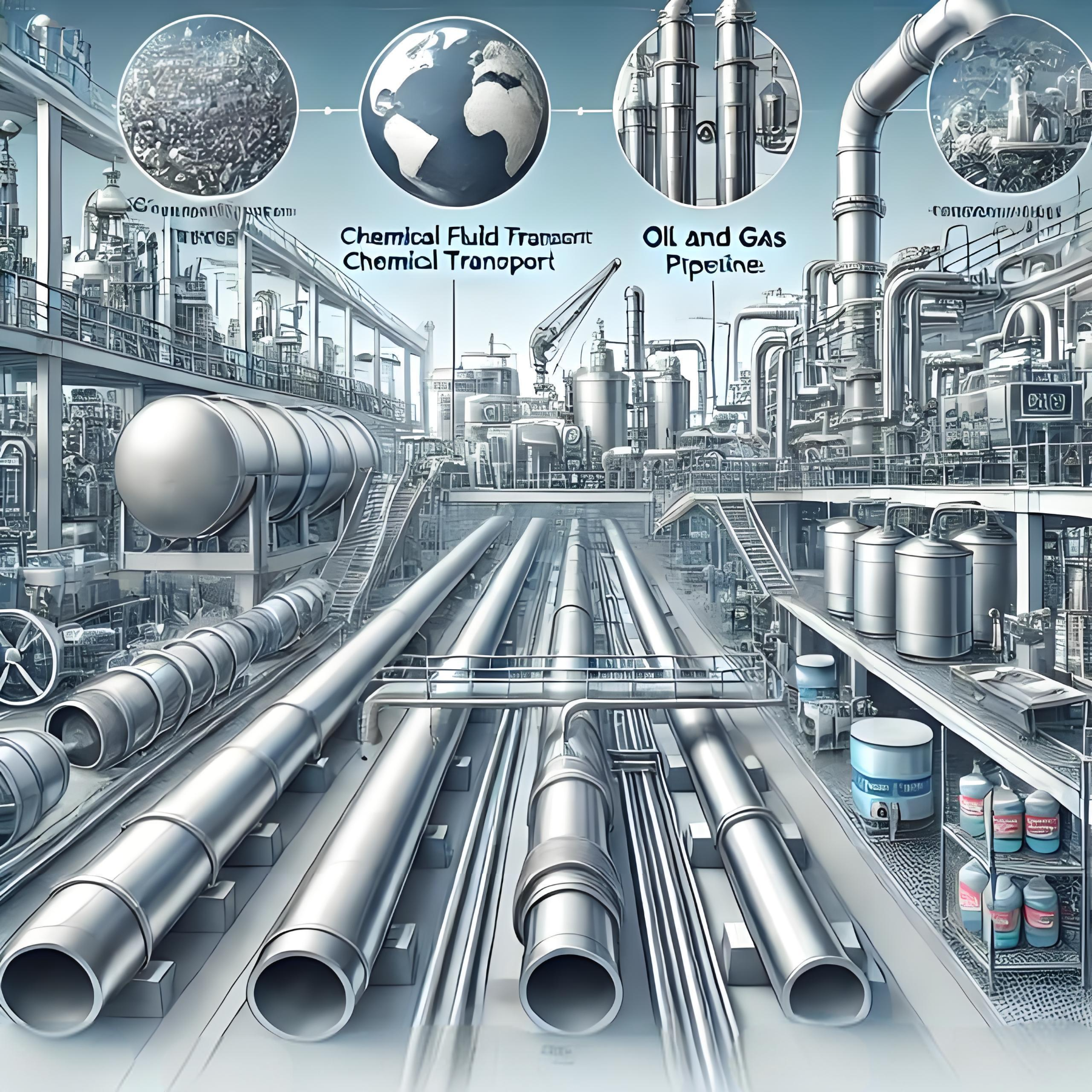
Superior Performance in Harsh Environments
High Pressure and Temperature Resistance: Withstanding Demanding Process Conditions
Carbon seamless pipes maintain structural stability at pressures exceeding 6,500 psi and temperatures up to 900°F (482°C), meeting ASTM A106 Grade B standards. A 2023 study in Nature Materials Science demonstrated that seamless carbon steel pipes retained 98% of their yield strength after 5,000 hours in hydrocarbon processing conditions—outperforming welded alternatives by 23%.
Smooth Internal Surface Reduces Fluid Resistance and Contamination Risk
The cold-drawn manufacturing process achieves a surface roughness (Ra) of ≤20 μin, reducing turbulent flow by 40% compared to welded pipes. In pharmaceutical applications, this smooth bore results in a 60% lower biofilm accumulation rate than ERW pipes, supporting compliance with USP <665>.
| Corrosion Factor | Carbon Seamless Pipe | Welded Pipe |
|---|---|---|
| Avg. Corrosion Rate | 0.002 in/year | 0.008 in/year |
| Pitting Incidence | 12% | 34% |
| Data source: Shell's 2025 corrosion analysis of chemical transport systems |
Enhanced Durability and Structural Integrity Without Weld Seams
Eliminating longitudinal welds removes common failure points responsible for 82% of pipeline failures in chemical plants (Ponemon 2023). Seamless pipes exhibit three times higher cyclic fatigue resistance, making them ideal for thermal cycling applications such as reactor cooling systems.
Corrosion Challenges and Mitigation Strategies in Carbon Steel Pipes
Carbon steel suffers from pretty serious HCl corrosion issues, losing about 0.12 inches per year in metal thickness. Fortunately there are some really effective ways to combat this problem and get much longer service life out of equipment. The market offers several good options including those epoxy PTFE hybrid coatings that cut down on corrosion damage by nearly 90 percent. Many facilities now implement automated IoT monitoring systems to track wall thickness changes in real time. And don't forget about cathodic protection setups which maintain around 95% effectiveness for roughly 15 years when properly maintained. All these methods work together within the guidelines set forth by NACE SP0169-2023 standards. In practice, plants using these combined strategies typically see their maintenance cycles stretched out almost four times longer in sulfuric acid applications than what's possible with plain old uncoated systems.
Critical Applications in the Chemical Industry
Use in High-Pressure Reactor Feedlines and Transfer Systems
Carbon seamless pipes have become the go-to choice for high-pressure reactor feed lines because they can handle stress levels well beyond 5000 psi. Studies indicate that these seamless designs cut down on pressure loss by about 18 percent in alkylation units when compared with welded versions, which means better overall system performance. The reason? A uniform internal structure that stops those tiny cracks from forming when there's rapid changes in pressure. This matters a lot in industries making ethylene and ammonia where pipe joints need to stay intact for both safety reasons and to keep operations running smoothly without unexpected shutdowns.
Case Example: Ethylene Production Plant Using ASTM A179 Carbon Seamless Tubes
An ethylene plant somewhere in the Midwest upgraded its system using ASTM A179 seamless tubes and saw absolutely no pipe failures during three whole years of operation. These pipes had to deal with constant exposure to super hot steam at around 950 degrees Fahrenheit plus all sorts of chlorine compounds. Without those pesky weld seams that usually become problem spots, the transfer headers just kept running smoothly even when dealing with really harsh chemicals. Maintenance crews noticed something interesting too their annual unplanned downtime dropped by about 22%. Plant managers now point to these results as solid proof why the API 938-B guidelines actually make sense for facilities where temperature fluctuations are part of daily operations in cracker units.
Seamless vs. Welded Pipes: Failure Rate Comparison in Corrosive Chemical Environments
According to industry stats, seamless carbon pipes fail at about 0.7% per year when exposed to sulfuric acid, compared to around 4.2% failures for welded pipes over the same period. Cold drawn seamless pipes have a uniform grain structure that actually helps prevent those pesky pits from forming, particularly important in hydrochloric acid systems running hotter than 140 degrees Fahrenheit. For plants dealing with chloride rich environments such as those found in vinyl chloride monomer processing, seamless options typically last anywhere from three to five times longer before needing replacement because their walls don't degrade as quickly under these harsh conditions.
Ensuring Purity and Compliance in Pharmaceutical Manufacturing
Meeting GMP Standards with Seamless Carbon Pipe for Sterile Fluid Transport
The design of seamless carbon pipes actually complies with Good Manufacturing Practice (GMP) standards because there are no gaps or cracks at the weld points where bacteria might grow or particles could collect. This matters a lot for moving around active pharmaceutical ingredients (APIs) or those special parenteral solutions that need to stay under 1 colony forming unit per milliliter for bacteria. Looking at real world data from 2023 helps put this into perspective. When auditors checked out 45 facilities approved across Europe, they discovered something pretty telling: systems with welded joints experienced contamination problems in their water for injection loops about 3.2 times more often compared to seamless piping setups. That kind of difference makes a strong case for why many manufacturers are switching over.
Minimizing Biofilm Formation Through Smooth Bore Finish
Cold drawn carbon seamless pipes can get their surface roughness down to under 0.8 microns, which actually beats the ASME BPE requirement of 1.5 microns max for bioprocessing equipment. The super smooth surface really helps prevent those pesky biofilms from sticking around. This matters a lot in systems running at temperatures between 25 and 50 degrees Celsius because every half micron bump in roughness increases the chance of Pseudomonas aeruginosa taking hold by about 18%. When these pipes are cleaned regularly with those hot 70 degree caustic solutions during CIP cycles, they stay sterile for much longer periods compared to electro polished welded alternatives that tend to wear down over time.
Applications in Purified Water and Clean Steam Distribution Systems
Carbon seamless pipe plays a vital role in two key pharmaceutical utilities:
| System | Seamless Pipe Advantage | Compliance Impact |
|---|---|---|
| Purified Water (PW) | No scale shedding contaminates ≤0.1 µm filters | Meets USP <645> conductivity limits |
| Clean Steam (Pure Steam) | Homogenous microstructure prevents condensate iron spikes | Aligns with EMA steam purity guidelines |
Over 87% of FDA-cleared biologics facilities used seamless carbon pipe in recent upgrades to purified water and clean steam systems, prioritizing its 20+ year service life over welded alternatives that typically require replacement every 6–8 years.
Material Standards, Certifications, and Quality Assurance
Key Standards for Carbon Seamless Pipe: ASTM A179, A213, and ASME Compliance
For those working with carbon seamless pipes in important chemical and pharmaceutical systems, meeting strict standards isn't optional it's essential. Take ASTM A179 for instance this standard applies specifically to heat exchanger tubes. Then there's ASTM A213 which deals with both ferritic and austenitic alloy tubes. These specs cover everything from how thick the walls need to be, what kind of strength they should have when pulled apart, right down to how well they resist corrosion over time. When it comes to parts that actually bear pressure, following the ASME Boiler and Pressure Vessel Code becomes absolutely necessary. And not just following it either manufacturers typically get someone independent to check all those mechanical properties we've been talking about. Recent research from the Pressure Vessel Research Council shows something pretty compelling too. Their 2023 findings indicate that carbon steel pipes certified under ASME standards cut down on system failures by around 37% in pharmaceutical settings compared to their non-certified counterparts. That kind of reliability makes all the difference in industries where even small failures can have major consequences.
Cold-Drawn vs. Hot-Rolled Seamless Pipes: Performance in Sensitive Applications
Cold drawn seamless pipes have much better surface finishes, typically around Ra 0.8 microns or better, along with tighter dimensional control within plus or minus 0.05 mm. These characteristics make them especially suitable for applications where hygiene is paramount, like distributing purified water through facilities. Hot rolled alternatives do save about 15 to 20 percent on costs for non critical chemical piping needs, but they come with a downside. The surface tends to be roughly 9 percent rougher than cold drawn versions, which creates greater risk for biofilm buildup over time. Because of this concern, many pharmaceutical companies now insist on using cold drawn ASTM A213 TP316L tubing specifically for their CIP and SIP systems that go through well over 150 cleaning cycles annually. The extra investment pays off in reduced maintenance headaches down the road.
Role of Certification in Passing Regulatory Audits and Ensuring Traceability
Nowadays, Material Test Reports (MTRs) that show what chemicals are in materials and their strength characteristics can be scanned right off pipe surfaces thanks to those little QR codes, making audits much faster to check. The FDA came out with new rules in 2024 saying companies must keep all their quality control records for at least seven years when following Good Manufacturing Practices. Most problems during inspections? Yep, 92% of them come down to missing or incomplete paperwork about where materials came from. For proper tracking through every stage, welders need both ASME Section IX certifications and those EN 10204 3.1 certificates from mills. Putting these together gives complete visibility from the moment steel leaves the factory until it gets installed in pipelines across different industries.
Future Trends and Strategic Selection Guidelines
Advancements in Coatings and Linings to Improve Corrosion Resistance
Epoxy-phenolic hybrid coatings offer 75% better pitting resistance than conventional epoxy layers in chloride-rich environments (NACE 2023). When paired with PTFE linings, they enable carbon steel use in pharmaceutical-grade steam systems requiring microbial levels below 80 CFU/mL. These innovations enhance durability while maintaining cost advantages over stainless alloys.
Integration with Digital Monitoring for Predictive Maintenance
The latest IoT wall thickness sensors combined with spectral analysis tech can actually spot pipe problems around 92 percent of the time, sometimes as much as six to eight months ahead of when pipes would fail otherwise. According to recent market research from 2024 on chemical processing gear, plants that adopted these digital monitoring systems saw their unexpected shutdowns drop by about 12%. Makes sense really because they catch those tiny cracks caused by stress corrosion way earlier than traditional methods. What this means for maintenance teams is they no longer have to stick strictly to monthly checkups. Instead, they respond based on actual conditions rather than following a fixed schedule, which saves both time and money in the long run.
Evaluating Cost, Performance, and Installation Best Practices by Sector
| Selection Factor | Petrochemical Priority | Pharmaceutical Priority |
|---|---|---|
| Temperature Tolerance | 400°C+ sustained | 150–200°C sterilizing |
| Surface Finish | Ra ≤20 µm | Ra ≤5 µm electropolished |
| Compliance | ASME B31.3 | ASME BPE & FDA 21 CFR |
| Cost Per Meter (DN100) | $280–$320 | $450–$550 |
Best practices include conducting lifecycle cost analyses between corrosion-resistant alloys and coated carbon steel, verifying bending radii against the 3.5×D minimum requirement for cold-drawn pipes, and selecting ASTM A106 Grade B over A53 based on sulfuric acid concentration thresholds.
FAQ
What are carbon seamless pipes used for?
Carbon seamless pipes are used in high-pressure and high-temperature applications in chemical and pharmaceutical industries for their superior durability, reduced risk of failure, and compliance with stringent industry standards.
How do carbon seamless pipes compare to welded pipes?
Carbon seamless pipes outperform welded pipes by offering higher corrosion resistance, durability, and structural integrity, and they significantly reduce the risk of contamination in pharmaceutical applications.
What standards must carbon seamless pipes comply with?
These pipes must comply with standards such as ASTM A179, A213, ASME compliance guidelines, and others to ensure quality, safety, and performance.