
 EN
EN

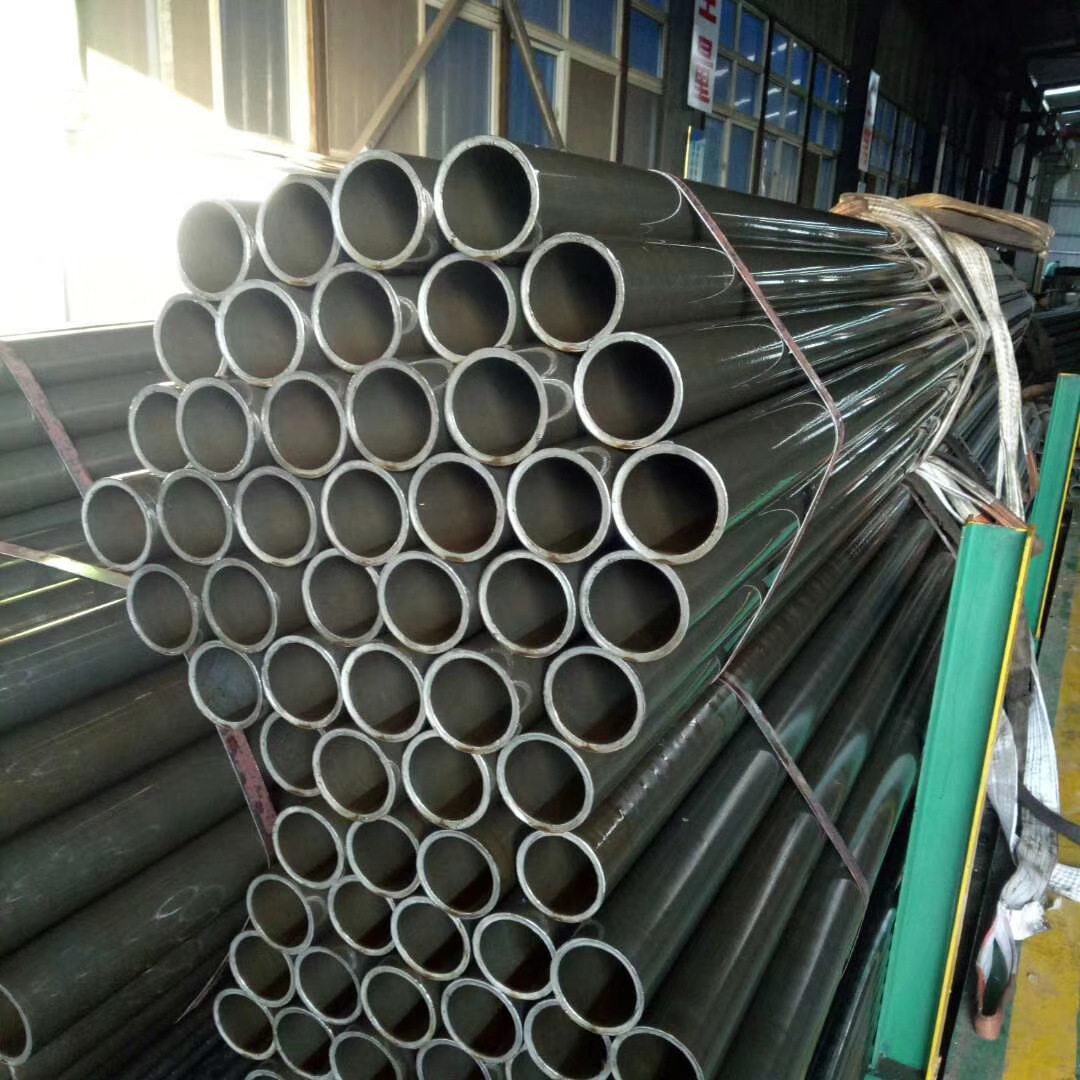
CNC Machining and Turning: Achieving Tight Tolerances in Precision Tube Fabrication
Modern precision tube manufacturing relies on advanced CNC (Computer Numerical Control) machining to achieve tolerances within ±0.0025 mm (±0.0001³), as demonstrated in aerospace components requiring ±5μm radial consistency (Pinnacle Precision 2025). Multi-axis CNC systems enable simultaneous turning and milling operations, resolving traditional trade-offs between diameter accuracy (±0.01 mm) and wall thickness uniformity (±0.005 mm).
The Role of CNC Machining in Achieving Tight Tolerances in Precision Tube Production
CNC machining eliminates human error through automated toolpath execution, achieving positional repeatability of 2μm across production batches. For medical-grade stainless steel tubes, this ensures concentricity deviations below 0.003 mm—critical for implantable device functionality.
How CNC Turning Enhances Diameter and Wall Thickness Accuracy
High-frequency spindle control in CNC turning (up to 15,000 RPM) coupled with diamond-tipped tools reduces surface irregularities by 78% compared to conventional lathes. Real-time servo motor feedback adjusts cutting forces to maintain ±0.003 mm wall thickness in aluminum hydraulic tubes.
Integration of Real-Time Monitoring and Control for Consistent Machining Quality
Embedded IoT sensors track tool wear and thermal expansion, triggering automatic compensation before deviations exceed tolerance thresholds. A 2024 Machining Efficiency Report showed this approach reduced dimensional outliers by 34% in titanium fuel injection tubing production.
Case Study: High-Accuracy Shaft Tubes Using Multi-Axis CNC Systems
A leading manufacturer achieved ±5μm straightness in 2m-long carbon fiber drive shafts by combining 5-axis CNC turning with active vibration dampening. Post-process measurements showed 92% of production lots meeting AS9100 aerospace standards without rework.
Trend: AI-Driven Toolpath Optimization in CNC Metal Fabrication
Machine learning algorithms now predict and offset material springback in copper-nickel alloy tubing, improving bend angle accuracy by 40% compared to manual programming. Early adopters report 22% faster cycle times while maintaining <0.01 mm dimensional consistency, as detailed in recent precision manufacturing studies.
Cold Drawing and Dimensional Accuracy: Enhancing Straightness, Roundness, and Surface Integrity
When we talk about cold drawing, it's basically taking those rough metal tubes and shaping them into really precise parts by dragging the material through something called a tapered die, all without heating things up. What happens during this process is pretty interesting - the metal grains get lined up properly, which actually makes the finished product stronger and more durable. And let's not forget about how accurate it gets either. We're talking about dimensions so precise they can be within just 0.05 millimeters either way according to industry specs from last year. For manufacturers working with precision tubes, cold drawing stands out because it improves several key factors that make all the difference when producing high quality components for demanding applications.
- Straightness: Reduces deviations to ±0.1 mm/m through axial stress control
- Roundness: Maintains ovality below 0.5% of nominal diameter
- Surface finish: Achieves Ra ± 0.8 μm without secondary polishing
How Cold Drawing Improves Length, Straightness, and Roundness Control in Precision Tubes
Cold drawing starts when tubes go through what's called a mandrel controlled reduction phase, typically cutting down their cross section by around 20 to 40 percent. The actual bending and stretching during this process helps get rid of those pesky residual stresses that make metal warp over time, which means we see much straighter products coming out the other end – about 80% better than what comes straight from extrusion machines. Some recent tests in 2023 looked at how this works for aerospace hydraulic lines specifically. They found that after just three passes through the drawing equipment, these lines maintained pretty consistent roundness throughout their entire length, staying within 0.03 mm tolerance even on 10 meter long sections.
Synergy Between CNC Machining and Cold Drawing for Superior Dimensional Stability
Combining cold drawing with CNC machining creates a hybrid manufacturing approach:
- Primary shaping: Cold drawing establishes baseline geometry with 95% material efficiency
-
Final tuning: CNC machining achieves micron-level tolerances on critical surfaces
This tandem process reduces machining time by 35–50% compared to conventional methods while maintaining concentricity within 0.01 mm.
Data Insight: 90% Reduction in Ovality After Cold Drawing Process
Recent analyses of medical-grade stainless steel tubes show how cold drawing addresses geometric imperfections:
| Parameter | Pre-Drawing | Post-Drawing | Improvement |
|---|---|---|---|
| Ovality | 1.2% | 0.12% | 90% |
| Surface roughness | Ra 3.2 μm | Ra 0.6 μm | 81% |
| Straightness error | 2.1 mm/m | 0.4 mm/m | 81% |
These enhancements enable precision tubes to meet ISO 2768-f grade tolerances without secondary processing.
Grinding and Surface Finishing for Demanding Applications
Internal and External Grinding to Meet Surface Finish Requirements in Precision Tubes
When precision tubes need surface roughness under Ra 0.4 microns, manufacturers typically turn to both internal and external grinding methods. For the inside of these tubes, smaller abrasive wheels work on refining those critical bores used in hydraulic and pneumatic systems. The outside gets attention too, making sure the diameter stays consistent so seals fit properly without leaks. According to research published in 2024 looking at aerospace materials, parts that go through grinding show about 30% better fatigue resistance than ones just turned on a lathe. This improvement happens because grinding removes those tiny cracks left behind during earlier machining steps, something that regular turning doesn't accomplish as effectively.
Achieving Sub-Micron Roughness in Aerospace-Grade Precision Tubes
The aerospace industry needs extremely smooth tube surfaces, around 0.1 microns roughness average or better, to keep fuel flowing smoothly without creating particles that could damage sensitive components. To get these super fine finishes, manufacturers use special diamond grinding wheels spinning between 15 thousand and 25 thousand revolutions per minute. They also run coolants through filters during the process which cuts down heat-related warping by about forty percent when compared to grinding without any cooling system. These days, companies rely on advanced profiling equipment to check if their work meets strict AS9100 quality requirements. Some of these devices can spot surface irregularities as tiny as 0.02 microns, ensuring everything stays within those tight tolerances required for safe aircraft operation.
When Is Grinding Cost-Ineffective Despite Tight Tolerances?
When dealing with tubes smaller than 50mm in diameter or producing fewer than 5,000 units each year, grinding just doesn't make financial sense anymore. Take medical guidewires as a case in point. These tiny components require a surface finish of around Ra 0.8 microns. Electropolishing gets them there about 20 percent quicker than traditional methods, which cuts down on manufacturing expenses roughly $3.50 per part. That adds up over time. For materials softer than 35 HRC hardness rating or those with inconsistent wall thicknesses exceeding 8%, other options work better. Honing and laser polishing tend to be more effective solutions in these situations. The industry has learned through experience what works best for different scenarios, balancing quality requirements against production economics.
Heat Treatment and Surface Enhancement for Long-Term Performance
Stress Relieving and Annealing to Maintain Dimensional Stability in Precision Tubes
When manufacturers apply controlled heating during stress relief and annealing processes, they can cut down internal stresses by around 80-85%. This makes all the difference when it comes to keeping precision tubes straight and true, especially those going into hydraulic systems or aerospace actuator components where even minor warping is unacceptable. Recent research published in 2024 looked at this phenomenon closely. The study showed something pretty impressive actually tubes that went through subcritical annealing maintained their round shape within just +/- 0.02 mm measurements despite being exposed to extreme temperatures ranging from minus 40 degrees Celsius right up to 300 degrees Celsius. Maintaining this kind of dimensional stability is absolutely essential if we want seals to hold up properly in these demanding environments where conditions constantly change.
Surface Improvement Through Nitriding and Advanced Coating Technologies
Plasma nitriding increases surface hardness by 40% while maintaining core flexibility—a key advantage for tubes in robotic joint assemblies. Advanced coating methods like HVOF (High-Velocity Oxygen Fuel) spraying achieve 5–8μm thickness uniformity, reducing wear rates by 90% in semiconductor handling systems.
Impact of Heat Treatment on the Durability and Performance of Precision Tubes
Carburizing treatments really boost how well parts resist wear and tear. Field tests have actually shown components last about three times longer when subjected to constant stress after this treatment. Take oil drilling equipment for instance. The case studies there reveal something interesting too. Normalized tubes can handle roughly 2.5 times more pressure cycles before breaking down than regular ones. This makes a big difference in practice. Maintenance crews spend way less time fixing these parts over a decade period because they just don't break as often. Companies save money on replacements and downtime which adds up nicely in the long run.
Quality Assurance: Welding, Inspection, and Metrology in Precision Tube Manufacturing
Role of HF Welding in Precision Tube Manufacturing with Minimal Distortion
High-frequency (HF) welding produces seamless joins in precision tubes by concentrating energy at the weld point, reducing heat-induced distortion. This method achieves weld integrity comparable to base material strength while maintaining ±0.1 mm dimensional accuracy.
Advanced Inspection Systems for Weld Quality Assurance
Automated phased-array ultrasonic testing (PAUT) and eddy-current systems scan 100% of welds at 12 m/min speeds, detecting defects as small as 50 μm. X-ray diffraction complements these methods by analyzing residual stresses near welds without destructive sampling.
Use of Coordinate Measuring Machines (CMM) and Laser Scanning for Non-Contact Metrology
Modern CMM systems measure precision tube geometries within 1.5 μm accuracy, while laser scanners capture 500,000 surface data points per second. These tools verify critical parameters like ovality (±0.5% tolerance) and wall thickness uniformity (±0.03 mm) at production-line speeds.
Balancing High Precision Measurement with Production Throughput
Advanced manufacturers achieve 98% first-pass yield rates by integrating inline laser gauges with adaptive process controls. Real-time feedback loops adjust forming parameters within 0.5-second cycles, demonstrating how AI-driven metrology systems maintain <0.1% scrap rates while operating at 85% equipment utilization.
Frequently Asked Questions (FAQ)
What are the main advantages of CNC machining in precision tube production?
CNC machining enables high precision and accuracy in tube production by eliminating human error and allowing for automated, repeatable processes. It helps achieve tight tolerances necessary for critical applications such as medical implants and aerospace components.
How does cold drawing improve the quality of precision tubes?
Cold drawing enhances the strength and dimensional accuracy of tubes by aligning metal grains during the drawing process without heating. It reduces dimensional deviations and improves straightness and roundness, making it ideal for high-quality component production.
Why is grinding used in precision tube manufacturing?
Grinding is used to achieve extremely smooth surfaces and tight tolerances in precision tubes. It enhances fatigue resistance and removes micro-cracks left after machining, which is essential for demanding applications such as aerospace and hydraulic systems.
How do advanced inspection systems contribute to precision tube manufacturing?
Advanced systems like phased-array ultrasonic testing and laser scanning ensure weld quality and dimensional accuracy by detecting defects and measuring geometries precisely. They help maintain high production quality standards by identifying potential issues before they affect the final product.
Table of Contents
-
CNC Machining and Turning: Achieving Tight Tolerances in Precision Tube Fabrication
- The Role of CNC Machining in Achieving Tight Tolerances in Precision Tube Production
- How CNC Turning Enhances Diameter and Wall Thickness Accuracy
- Integration of Real-Time Monitoring and Control for Consistent Machining Quality
- Case Study: High-Accuracy Shaft Tubes Using Multi-Axis CNC Systems
- Trend: AI-Driven Toolpath Optimization in CNC Metal Fabrication
- Cold Drawing and Dimensional Accuracy: Enhancing Straightness, Roundness, and Surface Integrity
- Grinding and Surface Finishing for Demanding Applications
- Heat Treatment and Surface Enhancement for Long-Term Performance
- Quality Assurance: Welding, Inspection, and Metrology in Precision Tube Manufacturing
- Frequently Asked Questions (FAQ)