
 EN
EN

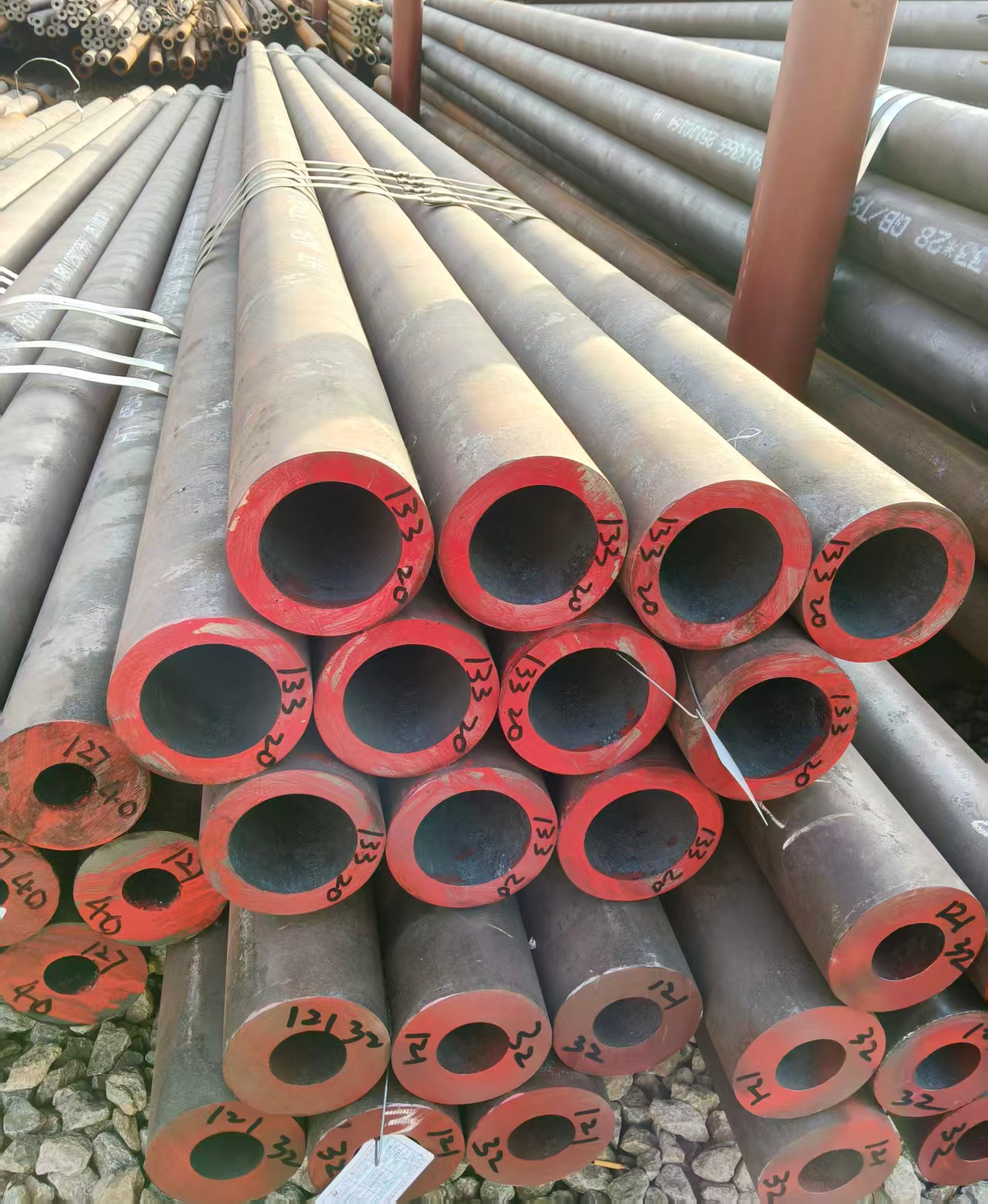
Why High-Temperature Alloy Pipes Are Critical in Modern Power Generation
Rising Steam Parameters and Material Degradation Challenges
Today's power generation facilities boost their performance by running steam boilers at temperatures between 600 to 650 degrees Celsius with pressure levels above 30 megapascals. These extreme conditions take a serious toll on regular carbon steel piping systems because they start breaking down quickly from both oxidation effects and changes in their internal structure. That's where chromium molybdenum alloys come into play. These special materials create protective oxide layers made primarily of chromium trioxide that actually repair themselves over time. Take P91 steel as an example it contains around 8 to 9.5 percent chromium and can hold up under continuous operation at 600 degrees Celsius, something ordinary carbon steel simply cannot do without deteriorating rapidly and losing its strength properties. Industry data shows that when plants don't use these specialized alloys, there tends to be roughly 30 percent more unexpected maintenance issues with turbines, which obviously impacts operational costs and downtime significantly.
Key Failure Modes: Creep, Oxidation, and Thermal Fatigue
High-temperature alloy pipes mitigate three interrelated failure mechanisms that threaten plant availability and safety:
- Creep deformation: Under constant stress and temperature, pipe walls gradually thin. Vanadium- and nitrogen-enhanced grades like P92 reduce long-term creep rates by 60% compared to legacy materials, per ASME B31.1-2023 data.
- Oxidation: Steam reacts with pipe surfaces to form brittle, spalling scales that accelerate wall loss. Chromium-rich alloys form adherent CrO barriers, cutting material loss by up to 80%.
- Thermal fatigue: Cyclic heating and cooling induce microcracks at welds and bends. Nickel-based alloys—including Inconel 625—demonstrate proven resilience across >10,000 thermal cycles in concentrated solar power (CSP) applications.
Collectively, unmitigated failures from these modes contribute to unplanned outages costing power plants up to $740,000 per day, according to the Ponemon Institute.
Chromoly Alloy Pipes (P11–P92): Balancing Strength, Cost, and Reliability
Evolution from P22 to P91/P92: Creep Strength Gains at 600–650°C
When steam temps go up to boost thermodynamic efficiency, traditional P22 steel (which has 2.25% chromium and 1% molybdenum) hits a wall around 565 degrees Celsius. At that point, its ability to withstand stress plummets dramatically, dropping about 40% compared to newer alloys like P91 and P92. The real breakthrough happened with microalloying techniques. Take P91 for example its tempered martensite structure gets extra strength from tiny MX carbonitride particles made with vanadium and niobium. This gives it roughly 35% better stress handling at 600C than old P22. Then there's P92, which takes things further by adding tungsten instead of some molybdenum (about 1.8% tungsten mixed with 0.5% moly). This change lets it work reliably all the way up to 650C while offering 20% more resistance to creep than P91.
| Grade | Key Elements | Max Temp (°C) | Creep Strength (vs P22) | Primary Applications |
|---|---|---|---|---|
| P22 | 2.25Cr–1Mo | 565 | Baseline | Low-pressure headers |
| P91 | 9Cr–1Mo–V–Nb | 600 | +35% | Supercritical boilers |
| P92 | 9Cr–1.8W–0.5Mo–V–Nb | 650 | +55% | Ultrasupercritical units |
ASTM A335 Compliance and ASME B31.1 Design Considerations for Alloy Pipe Systems
Choosing materials needs to match strict industry standards. Take ASTM A335 for instance it lays out what makes up seamless ferritic alloy pipes, how they should be treated thermally, and their mechanical properties. The specs get pretty specific too. For P91 steel, chromium content has to stay between 8.0 and 9.5 percent while molybdenum ranges from 0.85 to 1.05 percent. When designing these systems, engineers follow ASME B31.1 guidelines which set stress limits depending on temperature factors. At around 600 degrees Celsius, P91 can handle about 2.3 times more stress compared to regular carbon steel. Another thing designers need to consider is that chromoly expands less when heated. About 15 percent less expansion than carbon steel at those high temps actually helps reduce strain on supports and minimizes problems at pipe anchors and bends. Every completed system gets put through its paces with hydrostatic pressure tests as required by ASME Section I. These tests apply 1.5 times the normal operating pressure to make sure everything holds together properly under real world conditions.
Nickel-Based Alloy Pipes for Extreme Environments: Inconel, Incoloy, and Hastelloy
Resisting Sulfidation and Molten Salt Corrosion in Waste-to-Energy and CSP Plants
Standard alloys just don't cut it in waste-to-energy plants and concentrated solar power (CSP) installations where they face brutal chemical attacks. Sulfur packed flue gases lead to quick sulfidation problems, and those molten nitrate salts above 600 degrees Celsius really eat away at materials causing both corrosion and embrittlement issues. That's why engineers turn to nickel based options like Inconel, Incoloy, and Hastelloy. These contain over 60% nickel which helps keep the metal structure stable even when things get hot. They also throw in some chromium to fight off oxidation and sulfidation, plus molybdenum for extra protection against pits formed by chlorides and sulfates in harsh environments.
| Alloy Family | Key Properties | Critical Applications |
|---|---|---|
| Inconel | Oxidation resistance >1000°C | CSP thermal storage transfer lines |
| Incoloy | Balanced cost/performance in acids | Waste boiler superheaters |
| Hastelloy | Superior sulfidation resistance | Flue gas scrubbers & salt pumps |
Hastelloy C-276, for example, cuts sulfidation rates by 90% versus standard stainless steels in incinerator superheater tubes. In CSP plants, Inconel 625 retains over 500 MPa tensile strength after 10,000 hours in molten nitrate salts—enabling continuous, safe operation where carbon or chromoly steels would require replacement every 12–18 months.
FAQ
1. What makes high-temperature alloy pipes essential in modern power generation?
High-temperature alloy pipes are crucial because they withstand the extreme steam temperatures and pressures found in power generation, reducing unexpected maintenance and downtime.
2. How do chromium molybdenum alloys protect against oxidation?
Chromium molybdenum alloys form self-healing oxide layers primarily consisting of chromium trioxide, which reduces oxidation and prolongs the pipe's life.
3. What are the main failure modes addressed by high-temperature alloy pipes?
They address creep deformation, oxidative damage, and thermal fatigue, ensuring plant safety and efficiency.
4. Why is P91 steel preferred for high-temperature applications?
P91 steel is favored because of its high chromium content, offering better stress management and resistance to creep at elevated temperatures.