
 EN
EN

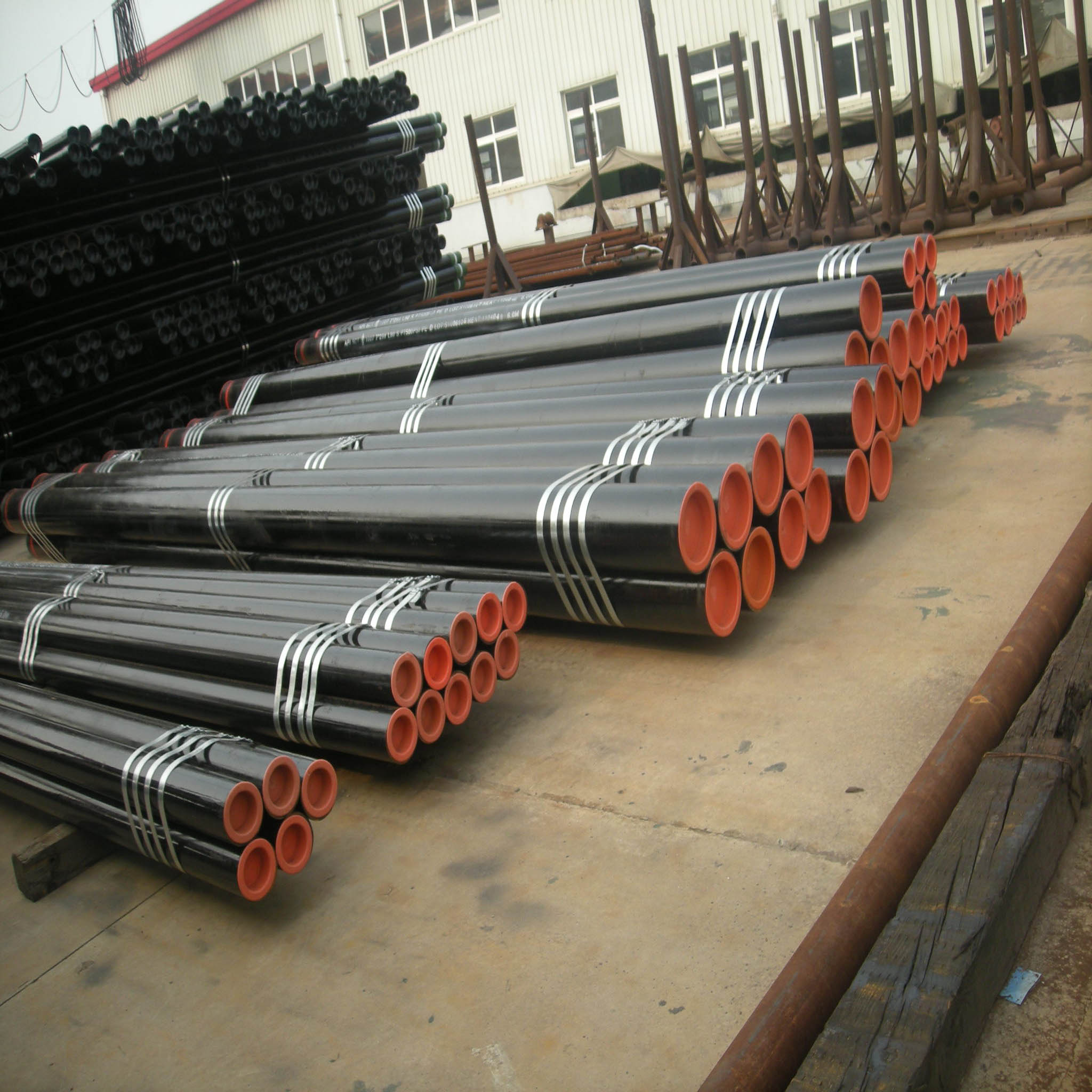
API 5CT Standard: Core Requirements for Oil Casing Pipes
Overview of API 5CT - Casing and Tubing for Oil & Gas
API 5CT is a specification created by the American Petroleum Institute that outlines requirements for oil casings and tubes used throughout various stages of well development including construction, production work, and injection processes. This standard works for both seamless and welded steel pipe products, helping maintain uniformity when it comes to how these components are designed, what materials they're made from, and how they perform under different conditions around the world's oil fields. What makes this standard so important? Well, it addresses things like acceptable size variations, structural integrity under stress, and whether equipment can handle harsh environments ranging from regular reservoir conditions all the way up to those extreme HPHT (high pressure high temperature) wells where reliability matters most down below ground.
Key Parameters Defined in API Specification 5CT for Casing and Tubing
The API 5CT standard sets pretty tough rules when it comes to how strong these pipes need to be and what chemicals they contain, especially for common types like J55, N80, and P110. Take P110 grade for instance it needs at least 110 thousand pounds per square inch of tensile strength before anyone will accept it. The N80 version strikes a nice middle ground between being strong enough and resisting corrosion too. When manufacturing these pipes, wall thickness has to stay within about 12.5 percent either way, which isn't much room for error really. Every single pipe also gets put through its paces with water pressure tests at least 2,000 psi to make sure nothing breaks apart when things get stressful down there in the well.
Alignment Between API and ISO OCTG Standards
The API 5CT standard works hand in hand with ISO 11960 to make sure Oil Country Tubular Goods (OCTG) can be used across different countries without compatibility issues. When it comes down to specifics, these two standards agree on things like how accurate measurements need to be, what grades of materials are acceptable, and which tests should be performed. The way API categorizes products from Group 1 through 4 matches up exactly with the ISO classification system, which makes it much easier for companies working on international oil projects to meet requirements. Even when looking at connections between pipes, there's agreement between the standards via protocols such as ISO 13679. This shared approach gives engineers greater confidence about how well equipment will perform in real world conditions and helps keep supply chains moving smoothly across borders where different regulations might otherwise create problems.
Certification Requirements for Oilfield Pipe Suppliers Under API 5CT
Manufacturers aiming for API 5CT certification need to go through pretty rigorous checks that cover everything from tracking materials back to their source, maintaining strict control over mill processes, and getting inspected by independent third parties. Once certified, facilities face another round of assessment every year to make sure they're still applying proper heat treatments and using reliable nondestructive evaluation methods consistently across all production runs. Before any pipes can actually be used downhole in serious drilling operations, there's also this full validation process involving burst tests, collapse resistance testing, and tensile strength measurements according to standards outlined in API TR 5C3. These aren't just paperwork exercises either—they represent real world safety requirements that protect both equipment integrity and personnel working in those harsh underground conditions.
Material Grades and Mechanical Properties for Oil Casing Pipe Performance
Common API Casing Pipe Grades for Various Well Applications
The American Petroleum Institute has established several casing grades designed for different well environments. H40 and J55 are commonly found in shallower wells where pressure isn't too intense. The J55 grade actually gives better structural integrity when dealing with shallow gas pockets, which makes it a popular choice among drillers working in those conditions. Moving up the scale, N80 works well for moderately deep wells and especially in horizontal drilling scenarios. When we get to P110, this grade really shines because it can handle the heavy loads required for deepwater drilling and those high pressure high temperature (HPHT) operations that push equipment to its limits. Looking at recent market data from the 2024 North America Oil Casing Pipe Market Report, something interesting emerges: around 60% of all unconventional shale wells today are running on P110 or even stronger casings just to avoid buckling issues in tricky geological formations.
Mechanical Properties and Chemical Composition by Grade (e.g., H40, J55, N80, P110)
Each grade is engineered with precise metallurgy to meet operational demands:
| Grade | Yield Strength (psi) | Key Composition | Common Use Case |
|---|---|---|---|
| H40 | 40,000 | Low carbon (0.25–0.35%) | Low-pressure land wells |
| J55 | 55,000 | 0.3–0.35% carbon, 1.2% manganese | Shallow gas reservoirs |
| N80 | 80,000 | Chromium-molybdenum alloy | Horizontal drilling in moderate depths |
| P110 | 110,000 | High nickel (2–3%) and vanadium | HPHT offshore wells |
Studies published in the Journal of Petroleum Exploration and Production show that N80 and P110 retain up to 92% of their yield strength at 300°F (149°C), making them ideal for geothermal and deepwater applications.
Selection Criteria Based on Well Construction and Integrity Needs
Material selection hinges on three key factors:
- Load dynamics: Collapse resistance for HPHT wells versus tensile strength in extended-reach drilling
- Corrosion exposure: High-alloy grades for H₂S-rich "sour" environments versus cost-effective J55 in benign formations
- Regulatory thresholds: P110 is often required for wells exceeding 15,000 psi, in line with ISO 11960 guidelines
Modern designs increasingly use hybrid approaches–pairing high-strength base materials with corrosion-resistant liners–to optimize durability and economic efficiency.
Performance Under High Pressure and High Temperature (HPHT) Conditions
Design Challenges in High-Pressure, High-Temperature (HPHT) Wells
In high pressure high temperature wells, the casing faces pressures over 15,000 psi and temps pushing past 400 degrees Fahrenheit, which really tests materials' ability to hold up. According to the latest HPHT Energy Report from 2024, nearly 4 out of 10 deep well failures happen because the casing gets deformed under such harsh conditions. For engineers working on these projects, finding the right balance between wall thickness, yield strength requirements (at least 110 ksi for P110 grade steel) and how materials expand when heated is critical. But there's another factor they have to watch - if they make the casing too thick or strong, it becomes too heavy to handle during installation, creating problems down the line.
Burst, Collapse, and Tension Resistance in Oil Casing Pipe Applications
Three primary performance metrics determine HPHT suitability:
- Burst resistance: Prevents rupture during stimulation; e.g., 10¾" N80 casing must withstand at least 12,000 psi
- Collapse strength: Resists external formation pressure in ultradeep zones
- Tension capacity: Supports axial loads exceeding 1.2 million pounds
API 5CT requires a safety factor of 1.25x above calculated worst-case loads across all three parameters to ensure operational margins.
Testing Protocols for Performance Validation Under Stress
Manufacturers validate HPHT performance through a multi-stage process:
- Hydrostatic testing at 125% of rated pressure
- Thermal cycling between -40°F and 450°F
- Sulfide stress corrosion cracking (SSC) testing per NACE TM0177
- Finite element analysis (FEA) for stress distribution modeling
These measures have been shown to reduce field failure rates by 67% compared to non-certified products (ASME 2023).
Case Study: Failure Prevention in Deepwater Drilling Operations
In 2023, a Gulf of Mexico operator prevented a potential $740M blowout by deploying Q125-grade casing with an 18% chromium alloy liner. During a 72-hour integrity test, the system successfully endured 14,700 psi and 392°F, underscoring how advanced materials and rigorous qualification processes enhance safety in extreme environments.
Corrosion Resistance and Long-Term Durability of Oilfield Casing Pipes
Oil casing pipes face aggressive downhole conditions–including hydrogen sulfide (H₂S), carbon dioxide (CO₂), and saline brines–that accelerate corrosion up to fivefold compared to surface environments (NACE 2023). Without proper protection, this degradation compromises well integrity and increases the risk of leaks or catastrophic failure.
API Standards for Oilfield Tubulars in Sour Service (e.g., SSC Resistance)
API 5CT mandates sulfide stress cracking (SSC) resistance for sour service applications. Casing must endure 720 hours of exposure to H₂S-saturated environments while stressed to 80% of its minimum yield strength. Industry surveys indicate that 92% of operators prioritize API-compliant SSC performance over initial cost when selecting tubulars for high-risk wells.
Coatings, Liners, and Alternative Alloys for Enhanced Durability
To combat corrosion, operators deploy several proven solutions:
- Epoxy/zinc hybrid coatings that reduce wall loss by 40–60% in brine-rich zones
- Corrosion-resistant alloys (CRAs) such as 13Cr and 28Cr stainless steels, offering 2–3 times the service life of carbon steel
- Removable thermoplastic liners that cut workover costs by approximately $740k per well over five years (Ponemon 2023)
Cost vs. Longevity in Corrosion-Resistant Material Selection
| Material | Cost Impact | Longevity Gain |
|---|---|---|
| Standard L80 | $150–$200/ton | 8–12 years |
| CRA Cladded Pipe | 4–6x base material | 25+ years |
Operators facing budget constraints and ESG commitments are adopting phased CRA deployment strategies. A 2024 Corrosion-Resistant Materials Analysis found this approach reduces total ownership costs by 18–22% compared to full-system upgrades.
Safety, Environmental Compliance, and Casing Integrity in Oilfield Operations
Ensuring casing integrity is central to operational safety and environmental stewardship. Robust design, monitoring, and regulatory compliance help prevent incidents that could harm personnel, ecosystems, or infrastructure.
Regulatory Standards for Carbon Steel Pipe Fittings in Sensitive Zones
The U.S. Environmental Protection Agency (EPA) along with the Bureau of Safety and Environmental Enforcement (BSEE) have put in place pretty strict rules when it comes to casing systems in areas where the environment is particularly sensitive. What does this actually mean? Well, basically they demand thicker walls on these casings, make sure they can resist corrosion especially from hydrogen sulfide (H2S), and verify that the cementing work meets certain standards so fluids don't seep into groundwater or soil. Take coastal wetlands as an example. Down there, many pipelines need extra protection against something called SSC resistance because the area tends to have naturally sour conditions that can damage regular materials over time.
Mitigating Safety and Operational Risks in Drilling Operations
Looking ahead at ways to prevent problems before they happen means having those smart sensors connected through the internet watching things constantly. These little gadgets can pick up on subtle changes in how casings are behaving or when pressures start acting strange. The Bureau of Safety and Environmental Enforcement recently put out some recommendations emphasizing how important continuous digital monitoring is for keeping those casings intact. According to industry reports from after 2022, places where operators implemented these kinds of monitoring systems saw around 38 percent fewer issues happening in their high pressure areas. And let's not forget about finite element analysis either. This fancy sounding method basically lets engineers play around with different stress scenarios while planning out fracking operations, which ultimately leads to better designed and positioned casing strings overall.
Environmental Safeguards and Leak Prevention Through Casing Integrity
Using multiple barriers like improved cementing techniques and double casing systems helps cut down on the chance of fluids leaking underground. A study published last year found that when shale gas wells use casings coated with epoxy resin, they emit about half as much methane as those without such coatings. Up north in the Arctic, engineers install vacuum insulated pipes to keep heat from affecting the frozen ground below. This approach makes it easier for companies to follow strict environmental guidelines aimed at protecting these delicate natural areas where even small changes can have big consequences over time.
Frequently Asked Questions (FAQ)
What is the API 5CT standard used for?
The API 5CT standard is used to specify the requirements for oil casing and tubing in well development, ensuring they meet the necessary strength and performance criteria for various conditions.
What are the common grades of casing pipes under API 5CT?
Common grades include H40, J55, N80, and P110, each designed to handle different environmental conditions and pressures within oil wells.
How does API 5CT relate to ISO standards?
API 5CT aligns with ISO 11960 and 13679 to ensure global compatibility and standardization of Oil Country Tubular Goods (OCTG), facilitating international project requirements.
What measures are taken to ensure corrosion resistance in oilfield casing pipes?
Corrosion resistance is enhanced using epoxy coatings, corrosion-resistant alloys, and removable liners to extend the service life and integrity of casing pipes.
Table of Contents
- API 5CT Standard: Core Requirements for Oil Casing Pipes
- Material Grades and Mechanical Properties for Oil Casing Pipe Performance
- Performance Under High Pressure and High Temperature (HPHT) Conditions
-
Corrosion Resistance and Long-Term Durability of Oilfield Casing Pipes
- API Standards for Oilfield Tubulars in Sour Service (e.g., SSC Resistance)
- Coatings, Liners, and Alternative Alloys for Enhanced Durability
- Cost vs. Longevity in Corrosion-Resistant Material Selection
- Safety, Environmental Compliance, and Casing Integrity in Oilfield Operations
- Frequently Asked Questions (FAQ)