
 EN
EN

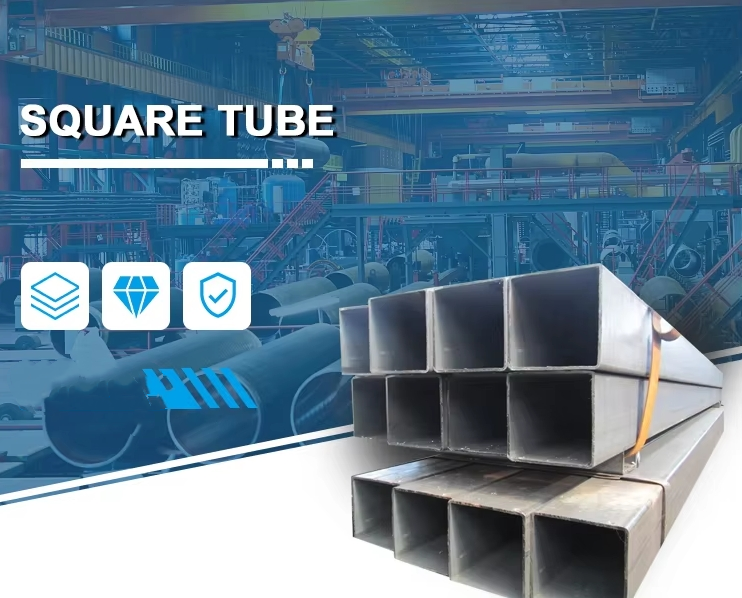
Structural Framing and Load-Bearing Applications of Square Tubes
Mechanical Properties That Make Square Tubes Ideal for Structural Support
Square tubing delivers better structural performance because of its symmetrical shape, giving consistent strength across all directions. This balanced construction makes them stand up better against twisting and crushing forces than traditional I-beams or round pipes when buildings need support from multiple angles. According to recent research published last year, these hollow sections can be anywhere between 18% to 22% stiffer than similar open profile materials. Plus they maintain good strength relative to their weight, which means foundations don't have to work as hard to hold things up. That's why many civil engineers specify square steel tubes for earthquake-prone areas or big factories where loads need to spread evenly throughout the structure instead of concentrating in one spot.
Case Study: High-Rise Buildings Using 3x3 Square Steel Tubing in Vertical Columns
The new 42 story building downtown Chicago used those special 3 by 3 inch square steel tubes for all the vertical supports instead of regular H columns. This saved about 14% on materials costs while still holding up floors that need to support over 8500 pounds per square inch. The standardized sizes made things much easier for the construction crew too they finished installing everything about a quarter quicker than usual. After everything was built, they checked how much the building actually moved when fully loaded and found it only bent less than an eighth of an inch. That kind of performance shows why this system works so well even in buildings where stress levels are through the roof.
Optimizing Size and Wall Thickness (1-inch, 2x2, 3x3) for Load-Bearing Capacity
Wall thickness and size directly influence load capacity, allowing engineers to tailor solutions for specific structural demands:
- 1-inch tubing (11-gauge, 0.125” wall): Suitable for non-critical spans under 12 feet in low-rise residential construction
- 2x2 tubes (0.25” wall): Carry 30–40% more load than equivalent rectangular hollow sections in truss applications
- 3x3 tubes (0.375” wall): Achieve column capacities up to 150 kips without external bracing
Designers use Finite Element Analysis (FEA) alongside ASTM A500 standards to optimize material efficiency while maintaining safety factors of 1.67–2.0 for permanent installations.
Square Tubes in Trusses, Roof Systems, and Long-Span Structures
Rigidity and Resistance to Bending in Industrial Truss Frameworks
Square tubes have a closed cross section and regular shape that gives them remarkable strength, which is why they work so well in industrial truss systems that need to cover distances beyond 60 feet. The way the material is spread evenly throughout these tubes means they resist bending forces pretty consistently, so there's less chance of structural sagging when roofs face heavy snow loads or strong winds trying to lift them off. When building structures that span long distances, many engineers find square tubes beat out traditional options like I beams and angle iron because they handle twisting forces much better. This makes all the difference in maintaining structural integrity over time without needing constant maintenance or reinforcement.
Case Study: Prefabricated Warehouse Roofs Using Standardized Square Tubing
In 2023, a new logistics facility in Texas used 6x6 inch steel square tubes throughout its 150 foot long prefabricated roof structure. By sticking to standard sizes for these tubes and their connections, workers saved roughly 40% of the time they would have spent assembling different sized components on site. Square shaped profiles made it much easier to fabricate joints at the factory, and everything fit together nicely with the secondary purlin system. As an added bonus, this approach actually cut down on overall steel usage by around 28%, all while maintaining the necessary strength requirements for the building's framework.
Design Strategy: Balancing Lightweight Construction with Structural Strength
Effective use of square tubing requires attention to three key factors:
- Wall thickness optimization: 0.25-inch walls for primary load-bearing members; 0.12-inch for secondary supports
- Span-to-depth ratios: Maintain a 1:20 ratio in roof systems to control deflection
- Connection engineering: Use welded gusset plates at critical nodes to ensure moment continuity
This strategy enables compliance with ASCE/SEI 7-22 standards and achieves up to 92% material utilization efficiency, as demonstrated in recent BIM-driven simulations.
Architectural and Safety Applications: Railings, Barriers, and Aesthetic Integration
Durability and Clean Aesthetic of Square Tube Railings in Urban Infrastructure
Square tubing finds its way into many important parts of buildings because it offers great strength without needing too much weight, plus it stays stable in shape. Those right angle corners form really strong connections that stand up against twisting forces, which is why they work so well for railings where lots of people walk around all day long like on bridges, inside sports arenas, or throughout busy city squares. When looking at materials, powder coated steel tends to hold up much better than regular old iron stuff we see everywhere else. According to some recent studies from Material Performance Index 2024, these coated versions experience about 85 percent less rust problems after ten whole years out there fighting weather conditions. And if someone prefers aluminum instead? Well then maintenance bills drop down roughly thirty bucks here and there each year near seaside locations since aluminum naturally resists getting oxidized over time.
Case Study: Aluminum and Steel Square Tubing in Staircases and Walkways
The transportation hub project used 6063-T6 aluminum square tubes measuring 2 by 2 inches with 0.125 inch walls for the outdoor stair rails, paired with ASTM A500 steel tubing at 1.5 by 1.5 inches and 0.134 inch walls for the indoor walkways. By mixing these materials, the overall weight dropped around 40 percent without compromising on strength requirements, which needed to handle at least 350 pounds per foot. Getting everything installed took about 22% less time compared to traditional round tube systems because the brackets aligned much easier during assembly. The construction team found this made a real difference on site, cutting down both labor hours and potential errors in positioning components.
Trend: Incorporating Square Tube Designs into Sustainable and Modern Architecture
Architects increasingly specify square tubes in LEED-certified buildings, leveraging their 100% recyclability and compatibility with solar panel mounting systems. Factory-cut precision reduces waste—projects using standardized 3x3-inch modules report 18% less scrap than custom alternatives. Emerging design trends include:
| Feature | Sustainable Benefit | Aesthetic Application |
|---|---|---|
| Perforated square tubes | 23% wind load reduction | Dynamic shadow patterns |
| Recycled aluminum | 56% lower embodied carbon | Brushed metallic finishes |
| Integrated planter slots | 15% stormwater retention improvement | Vertical green facades |
These innovations support OSHA-compliant safety standards while advancing biophilic and sustainable design goals.
Modular and Prefabricated Construction Using Square Tube Frameworks
Speed and Precision in Off-Site Assembly Enabled by Square Tubing
Square tubing has this really consistent shape that makes it great for precision manufacturing away from the job site. Those clean 90 degree corners in standard sizes like 2x2 and 3x3 steel tubes work wonders with automated welding machines, letting them hit pretty tight tolerances around plus or minus 1.5 millimeters. This matters a lot when putting together modular buildings on location. Contractors love being able to run wires and pipes inside those hollow tubes too. According to some industry research from last year, this approach cuts down on mistakes during actual installation by about a third compared to old school methods. Makes sense why more builders are switching to this system these days.
Case Study: Rapid-Deployment Housing Projects with Cold-Formed Steel Frames
In coastal Louisiana, a disaster-relief housing initiative used 14-gauge 3x3 cold-formed steel square tubing to construct 150 storm-resistant units in just 9 days. The frames achieved a lateral load capacity of 82 kN/m² per ASTM E2126, and bolt-together connections cut labor hours by 40% versus timber framing.
Growth Trend: Standardization of Square Tube Sizes in Modular Building Systems
More and more manufacturers have started using square tubing sizes ranging from about 1.5 by 1.5 inches up to 4 by 4 inches as their go-to option for building modular systems. This change makes things work better with existing crane equipment and all sorts of connection hardware they already have on site. According to recent data from the Modular Building Institute in 2024, this approach cuts down on wasted materials by around 18 percent. Plus it opens the door for interesting combinations like using galvanized steel for those structural walls while going with powder coated aluminum panels for the outside look. These mixed material solutions not only last longer but also give architects much more freedom when designing buildings that need to stand up to weather while looking good at the same time.
Material Selection: Steel vs. Aluminum Square Tubing in Different Environments
Comparative Strength, Corrosion Resistance, and Environmental Suitability
Steel and aluminum square tubes serve distinct roles based on structural and environmental needs. Steel offers higher tensile strength (50–100 ksi), making it suitable for heavy-load industrial frameworks. Aluminum, though less strong, is approximately 30% lighter, benefiting elevated or mobile structures. Key differences include:
| Feature | Aluminum Square Tube | Steel Square Tube |
|---|---|---|
| Corrosion Resistance | Naturally resistant to rust | Requires galvanization or coatings |
| Strength | Moderate (70–95 MPa yield) | High (250–550 MPa yield) |
| Environmental Suitability | Coastal, chemical exposure | Inland, controlled environments |
Untreated steel degrades three times faster than aluminum in saltwater environments (Material Durability Report 2023), increasing demand for aluminum in marine applications.
Case Study: Coastal vs. Inland Structures Using Steel and Aluminum Variants
Looking at a bridge railing installation from 2022 in Florida gives us an interesting case study comparing galvanized steel against 6063 aluminum square tubing. Within just 18 months, those steel railings started showing signs of pitting even though they had protective coatings applied. Maintenance costs ended up being around $180 per linear foot, which really adds up over time. Now here's something worth noting: while aluminum did cost about 40 percent more upfront, when we look at what it cost over its entire lifespan, maintenance expenses came out 70 percent cheaper than steel. For comparison, there was another situation where a warehouse in Nebraska used powder coated steel railings that didn't show any corrosion whatsoever after five whole years. This shows that steel can actually be pretty cost effective if installed in places with dry weather conditions like Nebraska typically experiences.
Cost vs. Longevity: Evaluating the Best Material for Long-Term Performance
Steel definitely comes in cheaper at first glance around 80 cents per pound compared to aluminum's roughly $1.50 per pound, which makes sense why many go for it on smaller inland jobs below the $100k mark. But wait there's another side to this story. Aluminum requires almost no maintenance whatsoever, and when we look at the big picture over fifteen years plus in places where corrosion is a real problem, owners end up spending anywhere from 25% to even 60% less overall with aluminum structures. Take those coastal areas or factories near chemical plants for instance. We've seen cases where steel installations needed replacing way before their time, sometimes running into costs well over seven hundred forty thousand dollars according to some recent infrastructure reports from last year. So while the price tag might seem steep initially, aluminum actually pays for itself multiple times over in these harsh conditions.
FAQ
What makes square tubes better than other structural materials?
Square tubes offer balanced structural performance, resisting twisting and crushing forces better than typical I-beams or round pipes. Their symmetrical shape provides consistent strength across all directions, making them ideal for constructions needing support from multiple angles.
Why are square tubes preferred in high-rise building columns?
Square tubes save on materials while providing excellent load-bearing capabilities. For example, using 3 by 3 inch square tubes in high-rise buildings can save up to 14% on material costs while still supporting significant loads efficiently.
How do square tubes contribute to modular and prefabricated construction?
Their consistent shape and standard sizes make square tubes ideal for precision manufacturing and off-site assembly, enhancing installation speed and reducing errors during the construction of modular buildings.
What is the advantage of using aluminum square tubes in coastal structures?
Aluminum square tubes are naturally resistant to rust, making them more suitable for coastal environments, where steel might require more maintenance due to corrosion.
Are square tubes sustainable for modern architecture?
Yes, architects increasingly use square tubes for sustainable architecture due to their 100% recyclability, compatibility with solar systems, and reduced waste from precision factory-cut processes.
Table of Contents
- Structural Framing and Load-Bearing Applications of Square Tubes
- Square Tubes in Trusses, Roof Systems, and Long-Span Structures
- Architectural and Safety Applications: Railings, Barriers, and Aesthetic Integration
- Modular and Prefabricated Construction Using Square Tube Frameworks
- Material Selection: Steel vs. Aluminum Square Tubing in Different Environments
-
FAQ
- What makes square tubes better than other structural materials?
- Why are square tubes preferred in high-rise building columns?
- How do square tubes contribute to modular and prefabricated construction?
- What is the advantage of using aluminum square tubes in coastal structures?
- Are square tubes sustainable for modern architecture?