
 EN
EN

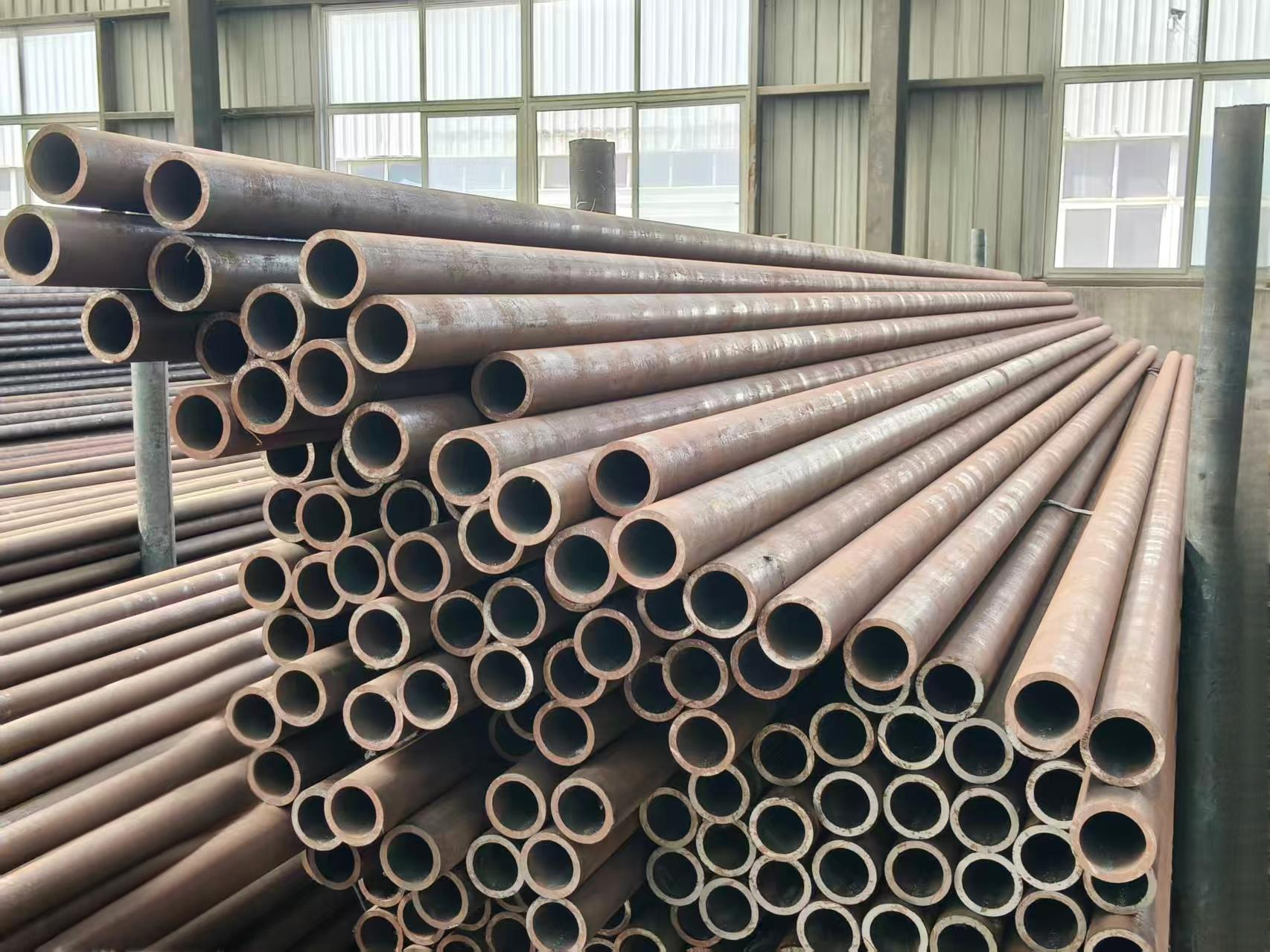
Superior Strength and Durability of Seamless Steel Pipes in Demanding Applications
Why Strength and Durability Make Seamless Steel Pipe Ideal for Automotive Frames and Rail Undercarriages
Seamless steel pipes have really strong structural properties because they're made from one solid piece of metal without any welded joints or seams. The lack of these weak points makes them popular among major car makers and train builders for parts that need to handle heavy loads, such as vehicle frames and train underframes. When there's stress concentrated at a weld, it can actually become dangerous over time. Recent tests conducted by European railway officials showed something interesting: seamless pipes can take about 20 percent more repeated stress before showing signs of wear compared to their welded counterparts. That's why we see them so often in applications where failure just isn't an option.
Fatigue Resistance in Suspension, Axles, and Continuous Rail Systems Under Cyclic Loading
Seamless pipes used in rail networks can handle well over a million compression and tension cycles each year without showing any signs of deformation, which makes these pipes great choices for things like train axles and bogie frames. When it comes to cars too, we see similar benefits. Tests on heavy duty truck shock absorbers showed that seamless steel versions lasted about 30% longer than other types when put through what's basically a simulation of ten years worth of real world driving conditions according to those OEM durability reports from last year. What really matters here is how these materials resist cracks forming even after being loaded and unloaded repeatedly. That kind of performance means parts made from seamless steel stay reliable much longer in all sorts of moving vehicles across different industries.
Comparison with Welded Pipes: Eliminating Weak Points at Joints and Seams
When there are no weld seams in pipelines, it cuts down on failures caused by corrosion at joints and cracks spreading through them by about 92%, according to research published in Materials Performance Journal last year. For hydraulic brake lines specifically, tests show that seamless pipes can handle nearly three times the pressure before bursting compared to those made with longitudinal welding. The extra strength means these pipes are much less likely to fail catastrophically in critical applications where the joints need to hold up under extreme conditions. Automotive engineers have been moving toward this technology for years because nobody wants their brakes to give out when they hit the pedal hard during an emergency stop.
Long-Term Performance in Corrosive Environments: OEM Test Data and Real-World Reliability
Salt spray tests accelerated over time have shown something interesting about seamless steel pipes. After simulating 15 years worth of exposure conditions, these pipes still maintain around 89% of their initial wall thickness. That's actually quite impressive compared to welded alternatives which only manage about half that retention rate. The difference matters in practice too. Railway companies operating near coastlines have noticed something remarkable. When they switched to seamless piping systems, replacement rates dropped by approximately 60% across two decades of operation. This means substantial savings on maintenance expenses throughout the entire lifespan of the infrastructure.
High Pressure Resistance for Critical Fluid and Hydraulic Systems
Mechanical Performance of Seamless Steel Pipe Under Extreme Stress in Braking and Fuel Systems
Steel pipes that are seamless can handle really high pressures, over 8,000 PSI or about 550 bar, which makes them great choices for hydraulic braking systems in vehicles. When it comes to automotive fuel lines, testing has revealed these pipes can take around 15 percent more stress compared to those made through electric resistance welding. That matters a lot because it helps stop leaks from happening in cars with turbochargers or other high performance engine setups where pressure spikes are common. The reason seamless pipes work so well is their uniform internal structure, something that gives them dependable results even when there are unexpected jumps in pressure during operation.
Case Study: Seamless Pipes in High-Pressure Diesel Fuel Injection Systems
According to a recent 2023 study from original equipment manufacturers, seamless pipes cut down on fuel injection problems by around 72 percent for those big rig diesel trucks running under pressures over 2,500 bar. Without those welded connections, there's basically nothing left where most failures happen. Research shows these welds are actually responsible for nearly nine out of ten breakdowns in high pressure fuel systems when we look at what goes wrong. The result? Less downtime for maintenance crews and safer operations across the board for transportation companies relying on these systems day after day.
Burst Pressure Comparison: Seamless vs. Welded Pipes in Transportation Applications
| Material Type | Average Burst Pressure (bar) | Cycle Fatigue Limit |
|---|---|---|
| Seamless Steel Pipe | 1,350 | 8.7 |
| ERW Welded Pipe | 930 | 3.2 |
This performance gap is crucial in safety-critical systems like rail air brakes, where emergency stops can generate pressure spikes up to 1,100 bar—well within the safe operating range of seamless pipes but near the failure threshold of welded alternatives.
Growing Demand for High-Pressure Resistant Materials in EV Hydraulic and Cooling Systems
Moving toward 800V electric vehicle architectures requires cooling systems capable of handling pressures nearly 45% greater than what we see in regular gas-powered cars. Most manufacturers are turning to seamless steel pipes these days, which account for around 68% of parts used in managing battery temperatures on newer EV models. Looking ahead, experts predict demand could jump by almost double in railway regenerative braking systems by 2028 according to last year's Global Transport Materials Report. What makes these steel components so valuable? They can withstand both intense pressure fluctuations and repeated temperature changes without failing. For anyone working on developing future electric transport solutions, understanding how these materials perform under stress remains absolutely critical.
Structural Integrity Through Absence of Welds and Joints
How the Seamless Manufacturing Process Enhances Structural Reliability
Seamless steel pipes get made using rotary piercing followed by cold drawing techniques which basically remove those pesky weld seams entirely. What this does is create a much more uniform grain structure throughout the material, giving it consistently good mechanical properties all around. According to some recent testing published in the Metals Performance Journal back in 2023, these pipes actually distribute loads about 27 percent better under stress when compared to their welded counterparts. That's why we see them used so often in critical components like car steering columns and railway bogie frames where reliability matters most. Another thing worth noting is how they handle torsion forces too. In drivetrain applications, seamless pipes can take on torsional stress roughly 18% higher than regular ones, all while keeping dimensions super tight at plus or minus just 0.1 millimeter tolerance.
Reducing Failure Points in Rail Air Brake and Hydraulic Networks
The joint-free construction of seamless pipes is especially beneficial in high-vibration environments:
- Air brake systems: 92% fewer fatigue cracks at connection points after 500,000 operational cycles
-
Hydraulic networks: 40% lower leakage rates in cold climates (-30°C) versus welded alternatives
A 2023 study of European freight rail operators found that seamless pipes reduced emergency brake failures by 34% over five years due to improved pressure retention and reduced maintenance needs.
Case Study: Leakage Reduction in Japanese High-Speed Rail Systems
After switching to seamless steel pipes in their hydraulic control systems, Japan's Shinkansen saw dramatic results according to maintenance records. Fluid leaks dropped by nearly two thirds during those tricky acceleration periods between 160 and 320 km/h. Getting rid of those pesky weld defects meant the system could handle pressures up around 35 MPa without issues, which is really important when making precise stops in hilly areas where sudden changes matter most. The switch saved about $2.8 million each year on maintenance costs for every train set. And the system stays running almost all the time too, hitting that impressive 99.98% availability mark. No wonder so many other countries are following suit these days, with close to 8 out of 10 new high speed rail projects adopting similar standards worldwide.
Key Applications in Automotive and Railway Transportation Systems
Usage in Automotive Chassis, Steering, Transmission, and Half-Shaft Bushings
The structural integrity of automotive systems relies heavily on seamless steel pipe since welding introduces weak points that can fail over time. When building car frames, this type of steel handles road vibrations really well because of how evenly the metal grains are distributed throughout, which means fewer problems with cracks forming after years of driving. For steering columns, manufacturers often go with cold drawn seamless pipes that maintain consistent wall thickness within about plus or minus 0.1 millimeters. This precision matters a lot for controlling hydraulic pressures accurately. Transmission lines also perform better thanks to their ability to withstand twisting forces without bending out of shape even when subjected to around 800 to maybe 1200 Newton meters of torque during those sudden gear changes. And let's not forget about half shaft bushings either these components take advantage of the exceptionally smooth surface finish (around Ra 3.2 micrometers or less) to reduce wear particles generated at high engine speeds, something that keeps maintenance costs down for everyone involved.
Role in Railway Air Brake Systems, Coupler Mechanisms, and Underframe Piping
Seamless steel pipe has become a standard choice for rail operator air brake systems because it can handle up to 35 to 50 percent more pressure before bursting than welded options. This makes all the difference when trains need to stop suddenly at pressures around 8 to 10 bar. The couplers themselves depend on these same seamless pipes for their pneumatic dampers too. Since they go through more than 20 thousand connection cycles every day, having materials that perform consistently is absolutely critical. Looking at the underframe piping installations tells another story. These systems just don't need much attention at all. Recent checks by the European Rail Agency from last year showed there were about sixty percent fewer maintenance calls needed over ten years compared to other systems.
Integration of Seamless Steel Pipe in Modular and Next-Gen Vehicle Manufacturing
Car manufacturers are starting to use laser cut seamless pipe segments in their modular chassis designs, which cuts down on assembly time quite a bit - around 25% according to some reports from Tesla's Gigacasting operations. For electric cars specifically, there's this thing called micro grooved seamless pipes with internal diameters between 2 and 4 millimeters that go into direct contact battery cooling systems. These help manage heat better, making the whole system about 18% more efficient at keeping things cool. The train industry is also getting in on this technology. Companies like Siemens require hydrogen annealed seamless pipes for their hydrogen powered trains. These special pipes maintain an impressive 99.95% gas purity when storing and transferring hydrogen, which matters a lot for safety reasons and overall performance as we move toward cleaner energy solutions.
Frequently Asked Questions
What makes seamless steel pipes more durable than welded pipes?
Seamless steel pipes lack welded joints and seams, which are common weak points in welded pipes. This absence improves structural integrity and corrosion resistance, making them more durable under stress and cyclic loading.
How do seamless steel pipes perform in high-pressure applications?
Seamless steel pipes can withstand higher pressures compared to welded counterparts, making them ideal for critical fluid and hydraulic systems. Their uniform structure allows them to handle unexpected pressure spikes without failure.
Why are seamless steel pipes preferred in automotive and railway systems?
In automotive and railway systems, seamless steel pipes offer superior fatigue resistance and structural stability, reducing failure rates and maintenance needs. Their ability to maintain consistent performance under dynamic conditions ensures reliability in transport applications.
Table of Contents
-
Superior Strength and Durability of Seamless Steel Pipes in Demanding Applications
- Why Strength and Durability Make Seamless Steel Pipe Ideal for Automotive Frames and Rail Undercarriages
- Fatigue Resistance in Suspension, Axles, and Continuous Rail Systems Under Cyclic Loading
- Comparison with Welded Pipes: Eliminating Weak Points at Joints and Seams
- Long-Term Performance in Corrosive Environments: OEM Test Data and Real-World Reliability
-
High Pressure Resistance for Critical Fluid and Hydraulic Systems
- Mechanical Performance of Seamless Steel Pipe Under Extreme Stress in Braking and Fuel Systems
- Case Study: Seamless Pipes in High-Pressure Diesel Fuel Injection Systems
- Burst Pressure Comparison: Seamless vs. Welded Pipes in Transportation Applications
- Growing Demand for High-Pressure Resistant Materials in EV Hydraulic and Cooling Systems
- Structural Integrity Through Absence of Welds and Joints
- Key Applications in Automotive and Railway Transportation Systems
- Frequently Asked Questions