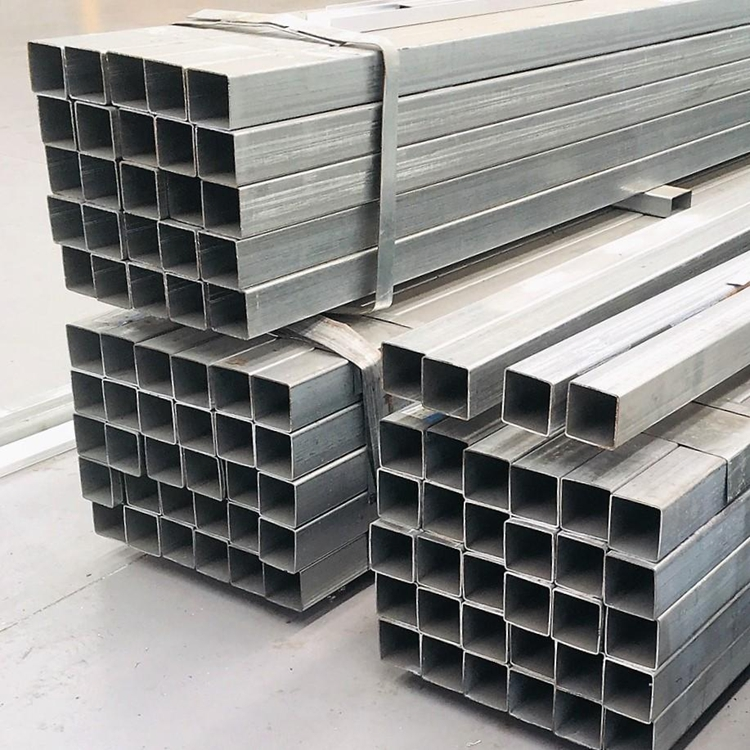
Square tubes have become really popular for structural framing because they offer great torsional strength and distribute loads evenly throughout the structure. The consistent shape helps spread out stress uniformly in every direction, which means there's less chance of parts breaking down at specific points in columns or beams. When it comes to bracing systems that need to handle sideways forces, square tubes work exceptionally well. According to research from the American Institute of Steel Construction published in 2023, these tubes can actually resist twisting forces 20 to 30 percent better than round ones during earthquakes. Another big plus is that the flat sides make connecting them to other parts of the structure much easier. Builders report cutting down on fabrication time by around a quarter when working with square tubes instead of those weird-shaped or curved profiles that take extra effort to attach properly.
A warehouse built recently made use of those 4x4 square steel tubes as main support columns and beams throughout the structure. This approach cut down on overall steel weight by about 15 percent compared to what would have been needed with regular I-beams, yet still provided the same strength capabilities. Because these tubes come in standard sizes, putting them together was much faster work. The bolt on connections took around 40% less time to install than if they had gone with welding instead. The whole framework ended up consisting of over 12,000 linear feet worth of tubing forming a strong backbone for the building. When tested against wind speeds reaching 110 miles per hour, this setup held up just fine and actually exceeded local building codes by nearly a quarter. That kind of performance makes sense when looking at both cost savings and long-term durability factors.
When it comes to roof trusses and purlins, square tubing actually delivers better strength relative to its weight compared to those open section profiles we see all the time, like C-channels. The thing is, these square sections handle both twisting forces and bending much better. What this means practically speaking? We can build lighter roofs that still hold their own when it comes to supporting loads. Foundations don't have to work as hard, and installers will appreciate the easier setup process too. For buildings with longer spans between supports, square tubes really shine because they bend less under heavy snow or strong winds. Plus, builders end up using around a quarter less material than what would be needed for solid beams that offer similar strength levels.
Good purlin design finds that sweet spot between doing the job right and keeping expenses down. When we go with smaller stuff like 2x2 square tubing, we can space them closer together, usually around 24 to 36 inches apart. This setup spreads out the weight more evenly across the structure and helps prevent those annoying sags that nobody wants to see. Light duty canopies generally work fine with 14 or 16 gauge tubes, but if we're talking about areas where snow piles up a lot, going with 11 or 12 gauge galvanized tubes makes sense. The savings on materials alone can cut costs somewhere around 15% when compared to what happens when people space things out too far and have to use bigger, heavier supports. Makes for a solid build that lasts without breaking the bank.
More and more architects are turning to square tubes as visible structural components these days because they offer both strength and that nice clean look people want in buildings. The straight edges work really well with glass walls, giving buildings solid support but still letting light through as if nothing was there. When we talk about building entrances or gateways, those angled cuts at the corners make such a difference in how the whole thing looks. Think about airport terminals or shopping mall entrances where this matters most. For things like canopy structures over walkways, square tubing lets designers span pretty big distances without needing those thick pillars everyone hates seeing. What's great is how versatile these tubes actually are. They bend into graceful arcs for modernist designs or snap into sharp corners for something more industrial looking. And let's not forget about the practical stuff either. Square tubes stand up to weather pretty well, so they last longer outside where they get hit by rain and sun. Plus, their smooth surface takes paint coatings beautifully, which means architects can get creative with colors without worrying about the finish wearing off after a few months.
Hot-dip galvanizing (ASTM A123) applies a protective zinc layer of 0.10–0.15 mm, significantly enhancing corrosion resistance in harsh environments such as coastal or industrial zones. Galvanized square tubes outperform uncoated steel and offer superior structural integrity compared to aluminum in critical outdoor applications.
| Material Comparison | Corrosion Resistance | Maintenance Needs | Structural Integrity |
|---|---|---|---|
| Galvanized square tubes | Excellent | Low | High |
| Plain carbon steel | Poor | High | High |
| Aluminum | Good | Low | Moderate |
Coastal railing installations using galvanized square tubes exhibit 70% less corrosion damage after 10 years compared to untreated steel, making them ideal for bridges, boardwalks, and security perimeters where structural reliability is non-negotiable.
Galvanized square tubes make great building blocks for public infrastructure projects because they last forever and basically take care of themselves once installed. The uniform size makes them easy to work with when putting things together piece by piece, and they pack quite a punch considering how light they are. When it comes to fencing, these tubes stand up to impacts much better than cheaper alternatives we see around town. Benches and other outdoor seating stay solid even after years of rain and sun beating down on them. Signage poles don't bend or sway in strong winds either, which is pretty important near busy roads where visibility matters. All this means municipalities can install these items without breaking the bank while still meeting all those pesky building codes required for public spaces.
Square tubes are preferred for their superior torsional strength and ease of connection. Their shape distributes loads evenly, reducing stress concentration in columns and beams.
Square tubes offer a better strength-to-weight ratio, allowing for lighter roofs that maintain load support, and require less material compared to traditional beams.
Galvanized square tubes provide excellent corrosion resistance, making them ideal for outdoor use, particularly in harsh environments like coastal or industrial zones.


 EN
EN